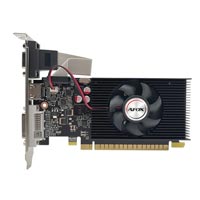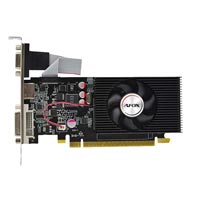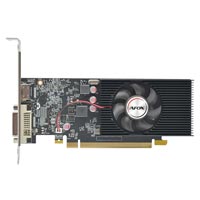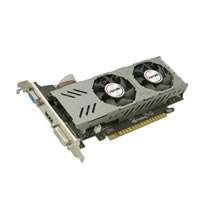

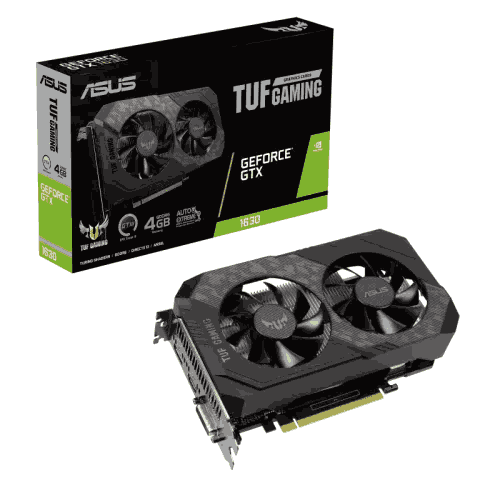
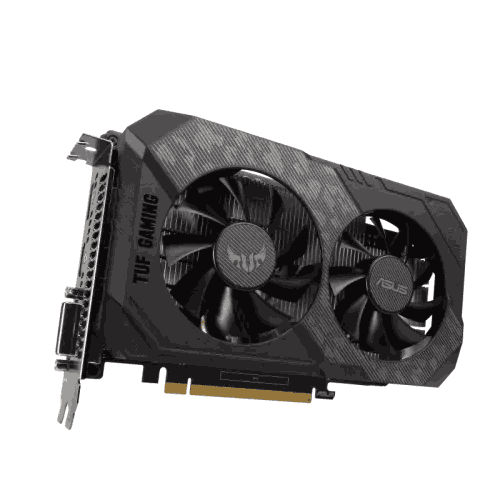
ASUS TUF Gaming GeForce GTX 1630 4GB GDDR6 Graphics Card
Regular Price:৳0.00Availability: SKU: 9.94.14.9115
Quick Overview
-
Support
Saturday – Thursday: 09 AM - 06 PM. -
Payment
Cash on Delivery | Card | Online Payment -
Shipping Cost
Inside Dhaka 100tk | Outside Dhaka 150tk -
Warranty Policy
Read More
Description
ASUS TUF Gaming GeForce GTX 1630 4GB GDDR6 Graphics Card Price in Bangladesh
the ASUS TUF Gaming GeForce GTX 1630 4GB GDDR6 Graphics Card is built for exactly that kind of upgrade journey.
This is a card aimed at users who want a reliable, brand-backed GPU for mainstream use—students building a first desktop, office users upgrading from older integrated graphics, and gamers who mainly play esports titles at 1080p. The “TUF Gaming” label matters here not because you’re chasing extreme performance, but because you’re buying into ASUS’s philosophy of practical durability, stable operation, and consistent user experience—the things that quietly matter after the first week of ownership.
In real life, a GPU purchase in Bangladesh has to handle more than game frames. It has to work well for the way we actually use PCs: long study sessions, office workloads that run for hours, YouTube and streaming, multiple browser tabs, Zoom/Google Meet classes, and sometimes a second monitor for productivity. Many people also need their GPU to fit older systems or modest power supplies, and they want the upgrade to be straightforward rather than a full rebuild. In that context, the ASUS TUF Gaming GTX 1630 is an appealing middle ground: a dedicated NVIDIA GPU with modern display outputs and GDDR6 memory, designed to deliver a noticeably better experience than basic graphics without demanding an enthusiast-level ecosystem.
A smoother everyday PC experience—beyond “gaming only”
The biggest difference a dedicated graphics card makes is often not only in games. It’s in the “small” moments: smoother UI movement at higher refresh rates, more stable playback at high resolutions, and more comfortable multi-display setups. If you use your PC for assignments, research, document work, or content consumption, the GTX 1630’s dedicated VRAM helps reduce the strain that integrated graphics can face—especially when you run multiple applications at once.
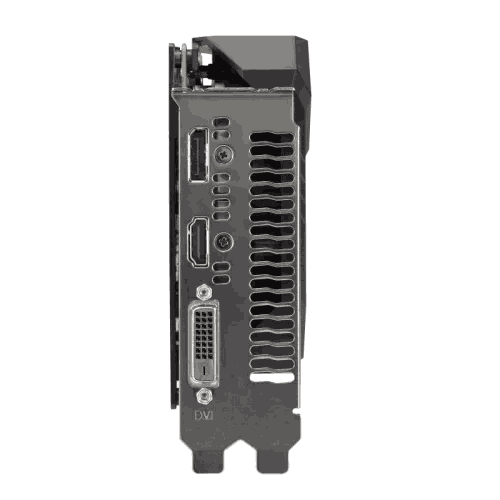
With the GTX 1630, you’re also stepping into modern external display connectivity. This model includes DVI-D, HDMI 2.0b, and DisplayPort 1.4a outputs. That’s meaningful in Bangladesh because households and offices often have a mix of monitors: an older DVI display in an office cabin, a common HDMI monitor at home, and a newer DisplayPort monitor for gaming or professional work. Having all three types available can save you time and cost—fewer adapters, fewer compatibility headaches, and an easier upgrade path.
Performance that’s tuned for practical 1080p use
The ASUS TUF Gaming GTX 1630 isn’t designed to compete with modern high-end GPUs. Instead, it focuses on a more realistic target: 1080p experiences in popular titles and light-to-moderate creative tasks while keeping the platform requirements reasonable.
The boost clocks provided for this exact model clarify its tuning:
- OC Mode boost clock up to 1845 MHz
- Gaming Mode boost clock up to 1815 MHz with a base clock of 1740 MHz
These numbers are important for two reasons. First, they show that you’re getting a card with a clearly defined performance profile, not an ambiguous “one size fits all” spec. Second, they highlight that ASUS is offering a straightforward approach to performance selection: if you want the highest available boost behavior, you can choose OC Mode; if you prefer a more standard profile, Gaming Mode gives you a balanced setup.
For esports-focused users in Bangladesh—where titles like Valorant, Dota 2, League of Legends, CS2, and similar competitive games are popular—what matters is consistent playability and reduced stutter. While actual FPS will depend on your CPU, RAM, game settings, and resolution, a card like the GTX 1630 generally serves as a comfortable starting point for 1080p competitive gaming with sensible settings. It’s the kind of GPU that makes a budget gaming PC feel “complete,” especially when paired with a modern CPU and adequate system memory.
GDDR6 memory and why it matters for your use
This model comes with 4GB GDDR6 memory—enough for many mainstream gaming and general-purpose tasks at 1080p. The GDDR6 aspect is particularly valuable compared to older memory types because it’s built for higher efficiency and better bandwidth behavior within the limitations of the card’s design.
At the same time, it’s important to be realistic. This GPU has a 64-bit memory interface, which is a confirmed specification for the model you’re asking about. What does that mean for you? It means the card is positioned for entry-level gaming and practical graphics workloads rather than heavy texture loads, high-resolution ultra settings, or modern AAA titles at maximum detail. If you’re the type of user who plays esports, does casual gaming, streams content, and wants a stable daily driver GPU, this is the kind of specification balance that makes sense. If you expect ultra settings at 1440p in the latest demanding games, you should consider a higher-tier GPU.
The honest win here is clarity: the GTX 1630 is for users who want a measured upgrade—a card that improves your PC’s graphics capability without pretending to be something else.
Display outputs that match the real Bangladeshi market
Bangladesh’s monitor market is wonderfully mixed—new and old monitors coexist everywhere. Many office environments still have DVI-based displays. Homes often have HDMI monitors or TVs. Newer gaming monitors often prefer DisplayPort for higher refresh compatibility and a more modern signal pipeline. The ASUS TUF Gaming GTX 1630 includes:
- DVI-D for older or office monitors
- HDMI 2.0b for modern monitors and TVs
- DisplayPort 1.4a for newer monitors and future-ready connectivity
This triple-output style is a practical advantage: it helps you build or upgrade a PC without forcing you to replace your display immediately. It also helps small businesses in Bangladesh manage upgrades gradually—keeping existing displays while improving GPU capability.
Designed for stable long-term ownership
People in Bangladesh often keep a desktop PC for many years. That changes how you should think about hardware. You’re not only buying performance; you’re buying confidence that the product can handle day-to-day use—heat, dust, longer usage sessions, and frequent on/off cycles.
ASUS’s TUF approach generally aligns with this “keep it for years” mindset. While we won’t claim specific military certifications or component-level details without verified documentation for this exact SKU, the TUF family is positioned around durability and stability. In practical terms, that means you can expect a card that is designed to be a reliable part of your system rather than a fragile add-on. For many buyers, that reliability is the real feature—especially in multi-purpose PCs used by families, students, or offices.
A realistic GPU for learning, work, and content creation basics
Not everyone buying a GPU is only gaming. Many users want to explore basic creative work: light photo editing, casual video work for social media, and learning tools that benefit from a discrete GPU. While professional workflows are often better served by higher-end cards, the GTX 1630 can still be a meaningful upgrade for beginners who want to learn without overspending.
If you’re a student who wants to experiment with creative tools, or a small business that needs a PC for marketing tasks like poster design, product photo touch-ups, or basic video editing, a dedicated GPU can make the system feel more responsive—especially when paired with an SSD and enough system RAM.
Bangladesh usage scenarios: how this card fits everyday needs
In Dhaka apartments, space is limited and systems often live under desks with less-than-ideal airflow. In many homes, a PC might run for long hours—online classes in the morning, office work in the afternoon, entertainment at night. The right GPU should feel like it fits your life, not the other way around.
Here are realistic scenarios where the ASUS TUF Gaming GTX 1630 makes sense:
- Upgrading an older office desktop so it can run dual monitors smoothly and handle heavy browser-based workflows without straining integrated graphics.
- Building a budget gaming PC for esports titles with stable performance at 1080p and sensible settings.
- Setting up a family PC that supports multiple types of displays (old DVI monitor + newer HDMI monitor) without adapters.
- A student’s study + gaming rig that balances entertainment and productivity without excessive power requirements (exact PSU and connector details should be matched to your specific system and confirmed by the seller).
- A small business PC refresh that improves display quality, video playback, and general UI smoothness for daily tasks.
Because Bangladesh buyers often compare based on “value per taka,” it’s worth saying: the value of this GPU is strongest when it replaces integrated graphics or very old cards, and when your goals are focused—1080p, esports, multi-display, daily stability.
Compatibility and what to check before you buy (important in Bangladesh)
GPU compatibility in Bangladesh isn’t only about the motherboard slot. Many people upgrade an existing PC, and the details matter:
- Monitor ports: Your display might have HDMI, DVI, or VGA. This GPU has DVI-D/HDMI/DP, but not confirmed VGA—so if your monitor is VGA-only, you’ll likely need a converter (choose carefully and confirm compatibility).
- Case space: Make sure your PC case can physically fit the card (length and thickness). If you’re using a compact case, confirm dimensions before ordering.
- Power supply and connector: Some PCs use older or low-watt PSUs. You must confirm whether your exact GTX 1630 model requires an external PCIe power connector and what PSU wattage is recommended. If you’re not sure, BME can help you select a safe pairing.
- CPU pairing: A very old CPU can bottleneck your GPU. If you’re using an older platform, you’ll still see improvements, but don’t expect miracles in CPU-heavy games.
Because you didn’t provide the power connector, recommended PSU, and physical dimensions/fan configuration, this content intentionally avoids claiming those details. That’s not a limitation—it’s a quality choice. It ensures you get information that stays true even after purchase.
The bottom line: a clean, dependable upgrade path
The ASUS TUF Gaming GeForce GTX 1630 4GB GDDR6 Graphics Card is a sensible choice when you want a dedicated GPU that improves your overall PC experience and supports a variety of displays common in Bangladesh. It offers practical clock profiles—up to 1845 MHz boost in OC Mode—and modern output support with HDMI 2.0b and DisplayPort 1.4a, while retaining DVI-D for older monitors. With 4GB GDDR6 and a 64-bit memory interface, it’s aimed at everyday computing and esports-focused 1080p gaming rather than high-end AAA ambitions.
If you’re upgrading responsibly—matching your monitor, case size, and PSU—you’ll likely find this card to be the kind of purchase that quietly makes your PC feel better every day. And for Bangladesh buyers who want straightforward value, that’s exactly what a well-chosen GPU should deliver.
✅ Key Features
- OC & Gaming Mode Profiles: Choose a performance profile that matches your preference, with OC mode boosting up to 1845 MHz for extra responsiveness.
- 4GB GDDR6 VRAM: Dedicated memory helps maintain smoother visuals in popular games and reduces pressure on system memory for daily workloads.
- 64-bit Memory Interface: A balanced design aimed at efficient entry-level graphics performance for 1080p use-cases and practical upgrades.
- HDMI 2.0b Output: Easily connect to modern monitors and TVs for clean digital audio/video output in home and office setups.
- DisplayPort 1.4a Output: Future-friendly connectivity for newer monitors, useful for modern desktop and gaming displays.
- DVI-D Output: Keeps compatibility with many older office and home monitors common across Bangladesh.
- TUF Gaming Design Philosophy: Built for stable long-term use and consistent operation in everyday PC environments.
- Practical Upgrade for Integrated Graphics Users: A meaningful step up for smoother desktop experience, media playback, and light gaming.
- Multi-Display Friendly Connectivity Mix: Mix-and-match monitor generations without relying heavily on adapters.
- Bangladesh-Ready Use Cases: Ideal for student PCs, family desktops, and budget gaming builds focused on esports titles.
✅ Usage / Applications
- Esports gaming at 1080p with sensible settings (Valorant, Dota 2, LoL, CS2, etc.)
- Upgrading from Intel/AMD integrated graphics for smoother everyday use
- Dual-monitor setups for office productivity and remote work
- Home entertainment PC for streaming and video playback
- Student desktop for online classes, research, and light gaming
- Basic photo editing and lightweight design tasks
- Small business PCs for POS/office work with better display output options
- Replacing older GPUs to regain stability and driver support in newer software
- Driving older DVI monitors without adapters
- Casual content creation for social media (entry-level workflows)
✅ Benefits of This Product?
- Smoother overall PC experience compared to integrated graphics for many users
- Better flexibility with monitors in Bangladesh thanks to HDMI + DP + DVI-D outputs
- Dedicated VRAM helps reduce system memory pressure in visual workloads
- Practical entry point for 1080p esports gaming builds
- Helpful upgrade for older desktops used in offices, tuition centers, and homes
- Clear performance profiles (OC/Gaming modes) for simple tuning decisions
- Supports modern display standards for future monitor upgrades
- A balanced GPU choice when you want improvements without overbuilding the PC
- Reduces reliance on display adapters for mixed monitor environments
- A more “complete” desktop experience for work + entertainment PCs
✅ Ideal For (150–200 Words)
The ASUS TUF Gaming GeForce GTX 1630 4GB GDDR6 Graphics Card is ideal for Bangladesh users who want a practical, dependable graphics upgrade rather than an expensive high-end build. It fits students building a first desktop for online classes, assignments, and casual gaming, especially if they want a dedicated GPU for smoother visuals and better multi-tasking. It also suits office professionals and small businesses in Dhaka, Chattogram, and other cities that need reliable multi-display support for spreadsheets, browser-heavy work, and day-to-day productivity.
For gamers, it’s a sensible match for those who mostly play esports and popular online titles at 1080p, where consistent performance and stable playability matter more than ultra settings. It’s also a good option for users upgrading older PCs that still use DVI monitors, because the card keeps DVI-D alongside HDMI and DisplayPort. If your goal is a balanced GPU for everyday computing, streaming, and entry-level gaming, this model delivers a straightforward, value-focused path.
✅ Why Choose the ASUS TUF Gaming GeForce GTX 1630 4GB GDDR6 Graphics Card? (250–350 Words)
The ASUS TUF Gaming GTX 1630 4GB GDDR6 makes sense when you want a graphics card that’s honest about its purpose: reliable performance for daily computing and 1080p-focused gaming, without forcing you into a costly platform upgrade. In Bangladesh, many people upgrade step-by-step—first the GPU, later the monitor, later the CPU. This card fits that reality by offering a useful uplift today while keeping compatibility with a wide range of displays.
One standout advantage is the practical port selection. With DVI-D, HDMI 2.0b, and DisplayPort 1.4a, it can connect to older office monitors as easily as newer gaming displays. That saves money and hassle, especially if your home or office already has working monitors and you’re not planning to replace everything at once.
You also get easy-to-understand performance profiles. The provided clocks—up to 1845 MHz boost in OC mode and up to 1815 MHz boost in Gaming mode with 1740 MHz base clock—show that ASUS has tuned the card for a balanced experience. It’s not about chasing extreme numbers; it’s about getting stable, usable performance in the real world.
Finally, the TUF Gaming positioning appeals to buyers who prioritize long-term stability. While exact component certifications aren’t listed here (and we won’t claim them without confirmation), the TUF family generally targets durability-focused design. If you want a GPU that helps your PC feel smoother for work, classes, and esports gaming—and that matches the mixed monitor environment common in Bangladesh—the GTX 1630 TUF is a practical and confidence-inspiring choice.
✅ Why Buy This Product from BME? (200–300 Words)
Buying a graphics card is not only about the model name—it’s also about getting the right match for your PC. When you purchase the ASUS TUF Gaming GeForce GTX 1630 4GB GDDR6 Graphics Card from Business Machine & Equipment (BME), you get a Bangladesh-based seller that understands local upgrade patterns: older desktops, mixed monitor types, and customers who want clear guidance before they commit.
BME can help you verify the things that matter most in real installations—such as whether your existing monitor will connect without adapters, whether your case has enough room, and what power supply setup is appropriate for your configuration. This is especially important for GPU buyers, because a mismatch in PSU, physical clearance, or display cable expectations can turn a simple upgrade into unnecessary trouble.
For individuals and businesses, BME is also a practical choice because you can approach the purchase in a procurement-friendly way—get product clarification, compare options within a budget, and make a decision that suits your specific workload (office, education, gaming, or mixed use). If you’re building multiple PCs for an office, lab, or training center, BME can support your selection process with product-level assistance so you choose a consistent, compatible setup.
If you want a smoother and safer buying experience in Bangladesh—focused on the right fit, not guesswork—BME is a dependable place to source your ASUS TUF GTX 1630.
✅ Buying Guide (300–450 Words)
Before you buy the ASUS TUF Gaming GeForce GTX 1630 4GB GDDR6 Graphics Card, take a few minutes to confirm compatibility. A smart checklist prevents 90% of upgrade problems.
1) Define your goal clearly
If your priority is esports titles at 1080p, smoother UI, and better multi-display support than integrated graphics, GTX 1630 is a reasonable target. If your goal is modern AAA gaming at ultra settings, consider a higher-tier GPU instead.
2) Check your monitor inputs first
This card offers DVI-D, HDMI 2.0b, and DisplayPort 1.4a. Look at the back of your monitor(s) and confirm what you need. If your monitor is VGA-only, you’ll likely need an active converter—ask BME for the best path before ordering.
3) Confirm your power supply situation
Power issues are a common mistake. Confirm two things:
- Whether your specific GTX 1630 model requires an external PCIe power connector (for example, a 6-pin connector).
- Whether your PSU wattage and quality are suitable.
If you don’t know, share your PSU model with BME and ask for a safe recommendation.
4) Measure your case clearance
Even if your motherboard has a PCIe x16 slot, the card must physically fit. Measure the available length and note whether your case has space for a thicker card. If you’re using a compact case, this step is critical.
5) Balance the GPU with your CPU and RAM
A very old CPU can bottleneck gaming performance. For the best experience, pair the GPU with adequate RAM and an SSD. If you’re upgrading an older PC, you’ll still benefit—but set expectations realistically.
6) Avoid common buying mistakes
- Buying without checking monitor ports and then relying on adapters.
- Ignoring PSU quality (cheap PSUs can cause instability).
- Forgetting case clearance and blocking airflow.
- Expecting entry-level GPUs to deliver high-end AAA performance.
If you want the cleanest purchase, send BME your PC specs (CPU, PSU, case model, monitor model) and ask for a quick compatibility confirmation.
✅ Customers Ask About / Frequently Asked Questions
Q1: Is the ASUS TUF GTX 1630 good for 1080p gaming?
A: It’s best suited for 1080p esports and lighter titles with sensible settings. For demanding modern AAA games at ultra settings, a higher-tier GPU is recommended.
Q2: What display ports does this graphics card have?
A: This model includes DVI-D, HDMI 2.0b, and DisplayPort 1.4a outputs.
Q3: Can I use it with an older DVI monitor in my office?
A: Yes. Because it has DVI-D, it can connect to many older DVI monitors directly.
Q4: Does it support connecting to a TV via HDMI?
A: Yes. The card includes HDMI 2.0b, which is commonly used for TVs and monitors.
Q5: Will it work on my motherboard?
A: If your motherboard has a standard PCIe x16 slot, it should be compatible in most cases. You should also confirm case space and power requirements.
Q6: Does this GTX 1630 require extra power connectors?
A: That depends on the exact card variant and design. If you’re unsure, confirm the power connector requirement with BME before purchase.
Q7: Is 4GB VRAM enough?
A: For esports games, everyday use, and many 1080p scenarios, 4GB can be enough. For heavy modern games with high textures or higher resolutions, more VRAM is beneficial.
Q8: What are the clock speeds for this model?
A: Confirmed clocks are OC mode: 1845 MHz (boost) and Gaming mode: 1815 MHz (boost) / 1740 MHz (base).
Q9: Can I run two or three monitors with this card?
A: Multi-monitor use depends on your display combination and cables. Since it includes DVI-D, HDMI, and DP, many multi-display setups are possible.
Q10: What warranty should I expect in Bangladesh?
A: Warranty coverage depends on the seller’s warranty channel and policy. Check BME’s listing or ask BME directly for the applicable warranty details for your purchase.
✅ Why Buy This Product (150–250 Words)
If you want a smart, straightforward GPU upgrade that matches the reality of PC ownership in Bangladesh, the ASUS TUF Gaming GeForce GTX 1630 4GB GDDR6 Graphics Card is a strong practical choice. It’s built for users who want a noticeable improvement over integrated graphics—smoother daily computing, better display flexibility, and a comfortable entry point into 1080p esports gaming.
The connectivity mix is especially useful: DVI-D for older monitors, plus HDMI 2.0b and DisplayPort 1.4a for modern screens. That makes it easier to upgrade your PC without replacing everything at once. And with clearly defined clock profiles—up to 1845 MHz boost in OC mode—you can choose the performance style that fits your preference.
Order the ASUS TUF GTX 1630 4GB GDDR6 from BME to build or upgrade with more confidence. If you share your PC’s current specs with BME, you can also get guidance to ensure the GPU fits your case, matches your monitor, and pairs safely with your power supply.
What is the price of ASUS TUF Gaming GeForce GTX 1630 4GB GDDR6 Graphics Card in Bangladesh?
Write a review
Question Answer
Have question about this product? Get specific details about this product from expert.