

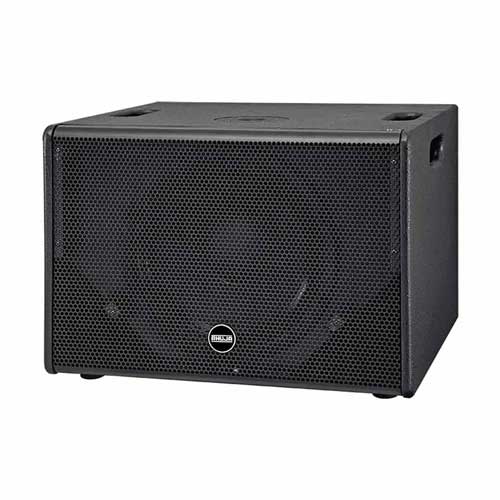
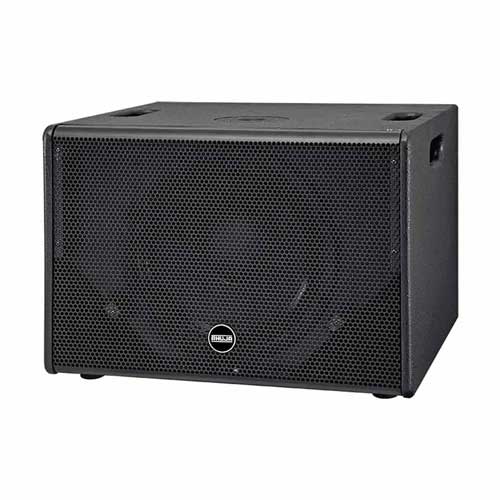
Ahuja SUB-300A 300 Watts Active PA Subwoofer Speaker
Regular Price:৳0.00Availability: SKU: 6.87.265.9005
Quick Overview
-
Support
Saturday – Thursday: 09 AM - 06 PM. -
Payment
Cash on Delivery | Card | Online Payment -
Shipping Cost
Inside Dhaka 200tk | Outside Dhaka 350tk -
Warranty Policy
Read More
Description
Ahuja SUB-300A 300 Watts Active PA Subwoofer Speaker in Bangladesh
When a professional sound system needs more than clear vocals and midrange detail, the missing ingredient is often controlled low-frequency reproduction. Bass gives music its physical presence, adds depth to live performances, and helps a full-range PA system feel considerably more complete. The Ahuja SUB-300A 300 Watts Active PA Subwoofer is designed specifically for that role.
Rather than functioning as a conventional full-range loudspeaker, the SUB-300A is a powered subwoofer dedicated to low-frequency reproduction for music programmes and PA applications. Ahuja equips it with a 30.48 cm, or 12-inch, low-frequency speaker and a built-in 300W RMS amplifier. The manufacturer also incorporates an active crossover with a 100Hz high-pass filter, meaning an external crossover is not required for the high-pass function described by Ahuja.
That combination makes the SUB-300A an interesting addition to a professional PA setup where the existing top speakers need dedicated low-frequency reinforcement.
The concept is straightforward. Instead of asking one speaker cabinet to reproduce the entire audio spectrum at high levels, the system can use a dedicated subwoofer to handle the lower-frequency portion of the programme. The top speaker can then be used for the higher-frequency content that carries vocals, instruments, announcements, and other important details.
For live music, events, presentations, entertainment venues, and other PA applications, this separation can help create a more purposeful sound system when the complete installation is properly designed.
A Dedicated 300W Active Subwoofer
The most important characteristic of the Ahuja SUB-300A is that it is an active subwoofer.
That means the amplifier required to drive the subwoofer is built directly into the cabinet. Ahuja specifies a 300W RMS power output for the internal amplifier.
This design removes the need to provide a separate external power amplifier exclusively for the subwoofer. A compatible mixer or audio source can feed the SUB-300A, while the built-in amplifier handles the power required by its low-frequency driver.
For a PA installer, this can simplify system planning.
Instead of finding a separate amplifier channel, matching its output characteristics to a passive subwoofer, and then configuring the appropriate crossover, an active subwoofer provides the amplifier and crossover functions within one dedicated cabinet.
That does not mean every installation will be identical. The mixer, top speakers, signal routing, crossover configuration, gain structure, and total system requirements still need to be considered. However, the integrated design provides a convenient foundation for a dedicated low-frequency section.
12-Inch Low-Frequency Speaker
Inside the SUB-300A is a 30.48 cm (12-inch) low-frequency speaker fitted with a 63.5 mm (2.5-inch) voice coil.
The 12-inch format is a practical choice for a compact professional subwoofer because it provides a dedicated driver area for low-frequency reproduction while keeping the cabinet considerably more manageable than many larger subwoofer systems.
A subwoofer's job is not simply to make everything louder. It is intended to reproduce the lower portion of the audio programme with greater authority than a typical full-range top cabinet.
In music, that lower-frequency information can include kick drums, bass instruments, electronic bass elements, and the low-end impact of recorded programme material.
When the SUB-300A is paired with suitable top speakers and configured correctly, the result can be a more complete tonal balance across the overall PA system.
Built-In Active Crossover
One of the most useful features of the SUB-300A is its integrated active crossover.
Ahuja specifies a 100Hz high-pass filter and states that no external crossover is required for this function.
This is important because a subwoofer and a top speaker should not necessarily be asked to reproduce exactly the same low-frequency content in a typical two-way PA arrangement.
The crossover helps divide the signal so that the subwoofer can focus on the low-frequency section while the high-pass output can be used to drive the top speaker without an external crossover, according to Ahuja.
For installers, that provides a convenient signal-management architecture.
For users, the practical benefit is a cleaner and more organized approach to integrating a subwoofer with a full-range PA speaker.
Low-Frequency Reproduction for Music
The SUB-300A is specifically described by Ahuja as a powered subwoofer designed for low-frequency reproduction in music programmes and other PA applications.
That makes it particularly relevant to music-focused sound systems.
A full-range speaker can reproduce bass, but adding a dedicated subwoofer changes the way the system handles low-frequency energy. The subwoofer takes responsibility for the lower range, allowing the complete system to be configured around a more specialized division of duties.
For live music, the difference can be particularly noticeable when the programme contains substantial bass information.
Kick drums can gain greater physical impact. Bass-heavy musical passages can feel more substantial. Recorded music can have a deeper foundation.
However, it is important not to confuse a subwoofer with a simple bass-boost control. The SUB-300A is a dedicated loudspeaker system designed to reproduce low-frequency content rather than merely electronically increasing bass on a full-range speaker.
Frequency Response of 47–125Hz
Ahuja specifies a 47Hz–125Hz frequency response at -6dB for the SUB-300A.
This specification clearly shows the intended role of the cabinet.
The SUB-300A is not designed to reproduce vocals or high-frequency programme material across the full audible range. Its job is to operate within the low-frequency portion of a larger PA system.
This makes system integration especially important.
A suitable top speaker should cover the frequencies above the subwoofer's operating region, while the subwoofer handles the lower portion of the programme.
The precise crossover and system response will depend on the complete equipment chain, but the published frequency-response specification provides a clear indication of where the SUB-300A is designed to operate.
96dB SPL at 1W/1m
Ahuja specifies an SPL of 96dB at 1W/1m.
This is a standardized sensitivity-related measurement that provides useful information for system designers.
It should not, however, be interpreted as the actual sound level a user will experience in every installation.
Room acoustics, distance, amplifier output, speaker placement, boundary effects, signal content, and other system variables all influence real-world sound pressure levels.
For a professional audio installer, the published SPL figure is useful as part of the larger process of matching the subwoofer to the rest of the PA system.
Maximum Rated SPL of 121dB
The SUB-300A has a manufacturer-specified maximum rated SPL of 121dB.
This indicates that the cabinet is designed for significantly more than low-level background music.
It can therefore be considered for professional PA environments where the low-frequency section needs to operate at substantial output levels.
As always, maximum SPL should not be treated as a promise of a particular coverage area. The acoustic environment and the rest of the system remain critical.
A well-designed sound system uses the subwoofer's output capability together with appropriately selected top speakers, amplifier settings, speaker placement, and system gain structure.
XLR and Combo Connectivity
The SUB-300A provides professional-style audio connectivity.
Ahuja specifies a LEFT/MONO Combo input using XLR and 1/4-inch stereo jack, a RIGHT input using F/XLR, LINK L&R connections using two M/XLR connectors, and LEFT/MONO and RIGHT output connectors using two M/XLR connections.
These connection options make the subwoofer suitable for integration into a conventional professional audio signal chain.
The use of XLR connections is particularly appropriate for PA environments where balanced professional audio connections are commonly used.
The inclusion of a Combo connector also gives additional flexibility for compatible input sources.
This is not a subwoofer designed solely around consumer RCA connections. Its connectivity reflects its intended professional PA role.
High-Pass Output for Top Speakers
Another particularly useful aspect of the SUB-300A is its high-pass output arrangement.
Ahuja states that the high-pass output can be used to drive the top speaker without any external crossover.
This can make system integration more straightforward.
The signal can enter the SUB-300A, the subwoofer can reproduce the low-frequency content, and the high-pass output can provide the appropriate signal path for a compatible top speaker.
In a two-way PA setup, this approach can help establish a logical relationship between the subwoofer and the full-range cabinet.
For installers, the ability to perform this function within the active subwoofer reduces the need for additional crossover hardware in compatible configurations.
Link and Loop-Through Output
The SUB-300A includes a Link/Loop-through output for connecting an additional SUB-300A, according to Ahuja.
This is useful when a single subwoofer is not enough for the intended system.
For example, a larger event setup may use two SUB-300A units to increase the available low-frequency output and provide a more substantial subwoofer arrangement.
The ability to link another unit also makes the system easier to expand without redesigning the entire signal chain from scratch.
Of course, the appropriate number of subwoofers depends on the venue, audience size, programme material, desired SPL, and top-speaker configuration.
Built-In Clip Limiter
Ahuja incorporates a built-in clip limiter to guard against accidental input overloading.
This is an important feature in active PA equipment.
Audio signals can occasionally exceed expected levels, particularly during live performance, microphone operation, or sudden changes in mixer gain.
A clip limiter helps manage excessive signal conditions before they create the same level of uncontrolled overload that might otherwise occur.
It does not mean that the subwoofer can be operated without regard to proper gain structure. Correct mixer levels, input sensitivity, system gain, and speaker operation remain important.
Nevertheless, the integrated limiter adds another layer of control within the active subwoofer.
Volume Control
The rear panel includes a dedicated Volume Control, allowing the subwoofer's contribution to the overall system to be adjusted.
This can be useful when balancing the low-frequency section against the top speakers.
Different rooms and different types of music may require different low-frequency levels.
A live band performance, recorded dance music, a speech-oriented presentation, and background music do not necessarily require the same subwoofer balance.
The dedicated volume control gives the operator or installer a practical adjustment point for the subwoofer's level within the complete PA system.
Ground Lift Switch
The SUB-300A also includes a Ground Lift Switch.
Ground-loop-related noise can sometimes appear when multiple pieces of powered audio equipment are connected together.
A ground lift facility can be useful during professional system troubleshooting where appropriate.
It should not be treated as a general-purpose switch that should always be activated. Grounding and electrical safety need to be handled correctly, and the switch should be used according to the system requirements and manufacturer's guidance.
Its inclusion nevertheless demonstrates that Ahuja has designed the SUB-300A for integration into real professional audio systems rather than simple standalone use.
Phase Reversal Switch
Phase management is another important consideration when integrating a subwoofer with top speakers.
The SUB-300A includes a Phase Reversal Switch, according to Ahuja.
The phase relationship between a subwoofer and the main speakers can influence how their outputs combine around the crossover region.
Depending on speaker placement, room acoustics, and the rest of the system, changing the phase relationship may help achieve better integration.
The switch therefore gives the installer or operator another practical tool for optimizing the system.
The correct setting will depend on the particular installation; there is no universal setting that is automatically correct for every room.
Bypass Function for the High-Pass Filter
Ahuja's current catalogue identifies a BYPASS switch for the high-pass filter on the rear panel.
This gives the system designer additional flexibility in how the signal path is configured.
Different PA installations can have different requirements. Some may use the SUB-300A's high-pass output to feed a top speaker, while others may employ a different signal-routing or crossover arrangement.
A bypass control allows the high-pass filter functionality to be managed according to the intended configuration.
This is particularly useful in professional audio because flexibility at the signal-routing stage can make one subwoofer suitable for more than one type of installation.
Rugged Bass Reflex Cabinet
The SUB-300A is housed in a rugged bass reflex enclosure with a textured paint finish, according to Ahuja's current catalogue.
The cabinet is designed specifically around the requirements of low-frequency reproduction.
A bass reflex enclosure uses an engineered cabinet and port arrangement to support the low-frequency response of the speaker system.
The result is a cabinet designed as a dedicated subwoofer rather than a general-purpose loudspeaker enclosure.
For professional PA use, the cabinet also needs to withstand the practical demands of transportation, installation, and repeated operation.
Ahuja describes the SUB-300A's enclosure as rugged, while its front grille provides protection for the speaker.
Strong Metal Grille Protection
The front of the SUB-300A is protected by a strong metal grille.
Ahuja's product description specifies a black metal grille, while the 2026–27 catalogue highlights the grille as protection for the speaker and part of the product's professional appearance.
For a subwoofer used in live sound and event environments, physical protection is important.
The front of the cabinet is exposed to handling, transport, stands, cables, and general activity around the PA system.
A strong grille helps protect the driver area from accidental contact while maintaining a professional appearance.
Pole-Mounting Capability
Ahuja's current catalogue specifies a stand adaptor at the top of the cabinet for pole mounting a full-range speaker system.
This is a practical feature for a conventional subwoofer-plus-top-speaker arrangement.
Instead of requiring a completely separate stand footprint for every component, a compatible full-range speaker can be mounted above the subwoofer using an appropriate pole configuration.
This can help create a compact PA stack for events and live sound applications.
The exact speaker and mounting hardware must, of course, be compatible with the subwoofer and safely rated for the intended configuration.
Built-In Handles for Portability
Despite its substantial cabinet, the SUB-300A includes built-in handles designed to assist with handling and portability.
This matters because active subwoofers are often transported between venues.
An 18.60 kg cabinet is not a lightweight portable speaker, but integrated handles can make lifting and positioning more manageable.
For event companies, musicians, rental businesses, and mobile PA operators, practical handling features can be just as important as the audio specifications.
The handles help the cabinet remain practical for installation and transportation without changing its primary role as a dedicated low-frequency speaker.
18.60kg Professional Cabinet
Ahuja specifies a weight of 18.60 kg for the SUB-300A.
The weight reflects the inclusion of the 12-inch low-frequency driver, built-in amplifier, cabinet construction, grille, controls, and associated electronics.
For permanent installations, the weight is generally less significant than the acoustic and system requirements.
For mobile use, however, it becomes a practical consideration.
The built-in handles help address that requirement, allowing users to move the cabinet more conveniently.
Compact Dimensions for a 12-Inch Active Subwoofer
The cabinet measures W530 × H370 × D480 mm according to Ahuja's published specifications.
These dimensions give the SUB-300A a relatively compact physical footprint for a 12-inch active subwoofer.
That can be useful when space is limited.
For small and medium event setups, a compact subwoofer can be easier to transport and position than a larger low-frequency cabinet.
It can also work well beneath or alongside compatible full-range PA speakers, depending on the system configuration.
AC 220–240V Operation
The SUB-300A is designed for standard AC 220–240V, 50/60Hz power.
This makes it appropriate for mains-powered professional PA installations in environments using compatible electrical supply.
Ahuja specifies an AC power consumption of 400 VA.
Because it is an active subwoofer, the amplifier and speaker electronics are integrated into the cabinet, so the unit requires its own AC power connection.
In a complete PA system, appropriate electrical distribution and cable management should be planned for the subwoofer along with the rest of the audio equipment.
Designed to Work with a Standard Mixer
Ahuja states that the SUB-300A can be driven by any standard mixer.
This makes the unit straightforward to integrate into many conventional PA signal chains.
A mixer can provide the programme signal, while the SUB-300A handles its dedicated low-frequency reproduction.
This architecture works particularly well for live music and event applications where a mixer already serves as the central source-management device.
The subwoofer does not need to replace the mixer. Instead, it becomes an additional active component in the overall sound system.
Live Music and Event Applications
The SUB-300A is naturally suited to music-oriented PA applications because low-frequency reproduction is one of the most important components of a convincing live sound system.
Consider a small live band performing at an indoor event.
The top speakers can reproduce vocals, guitars, keyboards, and higher-frequency content, while the subwoofer provides dedicated low-frequency reinforcement for bass-heavy programme material.
The result can be a more balanced overall system when the subwoofer and top speakers are correctly matched and positioned.
The SUB-300A can also be used in other event environments where recorded music forms a major part of the programme.
DJ and Entertainment Applications
For DJ-oriented sound systems, bass is often a central part of the listening experience.
Electronic music, dance music, hip-hop, and other bass-intensive genres can benefit from a dedicated low-frequency system.
The SUB-300A's 12-inch driver, 300W RMS internal amplifier, and published 47–125Hz response make it specifically oriented toward this part of the audio spectrum.
The subwoofer can be paired with suitable full-range top speakers to create a more complete two-part PA system.
The actual performance will depend on the entire system rather than the subwoofer alone.
Indoor and Open-Air Use
Ahuja's catalogue describes the SUB-300A as suitable for a variety of indoor and open-air applications.
That makes it relevant to more than fixed indoor installations.
Event organizers can consider the unit for suitable outdoor performances, temporary PA systems, community events, and other applications where dedicated low-frequency reinforcement is needed.
Outdoor environments present different acoustic challenges from indoor rooms because there are fewer reflective boundaries.
Consequently, system designers need to consider speaker placement, audience area, desired SPL, weather protection, power distribution, and other practical factors.
The manufacturer's stated indoor and open-air suitability should therefore be understood within an appropriately designed professional setup.
Commercial Event Applications in Bangladesh
The SUB-300A can be particularly relevant to Bangladesh's event and entertainment market.
Small and medium event companies, community halls, restaurants, resorts, performance spaces, and mobile sound operators may need a dedicated subwoofer to complement their existing full-range speakers.
A powered subwoofer can be especially convenient when the goal is to expand a PA system without adding a separate external amplifier solely for low-frequency reinforcement.
For event companies, the combination of integrated amplification, professional inputs and outputs, phase control, ground lift, and high-pass functionality provides practical system-integration options.
Restaurant, Resort and Venue Sound
Background music does not necessarily require a large PA system, but some venues want more substantial low-frequency performance.
Restaurants, resorts, entertainment venues, and event spaces may use a dedicated subwoofer when music is an important part of the atmosphere.
The SUB-300A can provide a dedicated low-frequency section while compatible full-range speakers handle the remainder of the programme.
The key is to balance the subwoofer correctly.
Too little bass can make the system sound thin. Excessive bass can overwhelm vocals and other important content.
The built-in volume control and phase reversal switch give installers practical tools for adjusting the subwoofer to the room and top speakers.
Professional System Integration
One of the most useful characteristics of the SUB-300A is that it is designed to be part of a larger system.
It has multiple signal connections, high-pass output capability, loop-through connectivity, phase reversal, ground lift, and an integrated crossover.
These are not features that matter much in a simple consumer speaker.
They become important when an audio professional needs to integrate a subwoofer into an existing PA architecture.
For example, a mixer can feed the SUB-300A, the subwoofer can reproduce low-frequency content, and the high-pass signal can be sent to a compatible top speaker.
An additional SUB-300A can also be connected through the link/loop-through facility when the installation calls for another unit.
Practical System Expansion
The ability to link an additional SUB-300A provides an upgrade path.
A user may begin with one active subwoofer for a smaller event system.
As the sound system grows, a second unit can be incorporated where appropriate.
This approach can be more practical than replacing the original subwoofer entirely.
Of course, simply adding another subwoofer does not automatically guarantee better results. Placement, phase relationship, crossover configuration, available electrical power, top-speaker matching, and venue acoustics must all be considered.
The important point is that Ahuja has provided a dedicated loop-through facility for this type of expansion.
Why an Active Subwoofer Makes Sense
An active subwoofer can simplify the architecture of a PA system because amplification is already built into the cabinet.
With a passive subwoofer, the system designer has to provide appropriate external amplification.
With the SUB-300A, the 300W RMS amplifier is already integrated.
This can reduce the number of separate components required for the low-frequency section and make setup more straightforward for users who already have a compatible mixer and top speakers.
It can also make the system easier to transport because the amplifier and subwoofer remain together as one unit.
A Purpose-Built Low-Frequency Solution
The Ahuja SUB-300A should not be judged by the same criteria as a full-range PA speaker.
Its purpose is narrower and more specialized.
It is designed to handle low-frequency content.
Its 12-inch driver, 47–125Hz frequency response, 300W RMS built-in amplifier, and active crossover all support that purpose.
This specialization can make a major difference when building a two-way PA system.
Instead of demanding that the top speaker reproduce the entire programme at high levels, the system can assign low-frequency reproduction to the dedicated subwoofer.
The result can be a more purpose-built system architecture.
Final Perspective
The Ahuja SUB-300A 300 Watts Active PA Subwoofer is a practical low-frequency reinforcement solution for professional audio systems.
It combines a 12-inch low-frequency driver with a built-in 300W RMS amplifier, active crossover, high-pass output, link/loop-through connectivity, clip limiting, volume control, ground lift, phase reversal, and professional XLR/Combo connections.
Its 47–125Hz frequency response and 121dB maximum rated SPL further establish its role as a dedicated subwoofer rather than a full-range speaker.
For live music, events, entertainment venues, commercial spaces, and other suitable PA applications, the SUB-300A can provide the dedicated low-frequency foundation needed to complement compatible top speakers.
For Bangladesh-based buyers looking for an active subwoofer that combines amplification and low-frequency reproduction in one cabinet, the Ahuja SUB-300A is a focused professional option.
✅ Key Features
- 300W RMS Active Subwoofer: Combines a dedicated low-frequency speaker with a built-in 300W RMS amplifier for a self-powered bass solution.
- 12-Inch Low-Frequency Driver: Uses a 30.48 cm (12-inch) LF speaker with a 63.5 mm (2.5-inch) voice coil for dedicated bass reproduction.
- Built-In Active Crossover: Incorporates a 100Hz high-pass filter, eliminating the need for an external crossover for the specified high-pass function.
- High-Pass Output: Provides a high-pass output for connecting a compatible top speaker without requiring an external crossover.
- 47–125Hz Frequency Response: Concentrates the cabinet's operation on the low-frequency portion of a PA system.
- 121dB Maximum Rated SPL: Provides substantial rated output capability for suitable professional PA applications.
- Link/Loop-Through Output: Allows another SUB-300A to be connected when a larger low-frequency system is required.
- Built-In Clip Limiter: Helps protect against accidental input overloading during operation.
- Phase Reversal Switch: Gives installers an additional control for integrating the subwoofer with compatible top speakers.
- Ground Lift Switch: Provides a practical facility for managing certain signal-ground issues in professional audio setups.
- Professional XLR/Combo Connectivity: Offers flexible signal connections suitable for professional PA equipment.
- Pole-Mounting Facility: Includes a top stand adaptor for mounting a compatible full-range speaker above the subwoofer.
✅ Ideal For
The Ahuja SUB-300A 300 Watts Active PA Subwoofer is ideal for users who need dedicated low-frequency reinforcement rather than another full-range speaker.
Live Music Performers: Bands and musicians can use it as the low-frequency section of a compatible PA system to complement full-range top speakers.
DJ and Entertainment Setups: Its dedicated 12-inch low-frequency driver makes it suitable for music-focused systems where bass reproduction is an important part of the listening experience.
Event Management Companies: A powered subwoofer can expand an existing PA system without requiring a separate external amplifier dedicated to the subwoofer.
Restaurants and Resorts: Suitable for venues where music forms an important part of the atmosphere and a more substantial low-frequency foundation is required.
Community and Event Venues: The SUB-300A can complement compatible full-range speakers for presentations, programmes, and entertainment events.
PA System Integrators: Its active crossover, high-pass output, link output, phase reversal, ground lift, and professional connectors provide useful options for system integration.
Mobile Sound Operators: Built-in handles and an 18.60kg cabinet make it practical for suitable mobile PA applications where dedicated bass reinforcement is required.
For Bangladesh-based customers, the SUB-300A is particularly relevant when the goal is to strengthen the low-frequency section of an existing or newly designed professional PA system without adding a separate subwoofer amplifier.
✅ Why Choose the Ahuja SUB-300A 300 Watts Active PA Subwoofer?
The Ahuja SUB-300A offers a focused combination of low-frequency reproduction, integrated amplification, and professional system connectivity.
Its 300W RMS built-in amplifier means the subwoofer does not require a separate external power amplifier dedicated to driving its internal speaker. Ahuja pairs this amplifier with a 30.48cm (12-inch) low-frequency driver featuring a 63.5mm (2.5-inch) voice coil.
The integrated crossover is another major advantage. Ahuja specifies a 100Hz high-pass filter and a high-pass output that can be used to drive a compatible top speaker without an external crossover. This makes the SUB-300A particularly practical for two-way PA configurations where the subwoofer and top speaker need to work together as a coordinated system.
The unit also provides useful professional controls. Volume adjustment, phase reversal, ground lift, and a built-in clip limiter give installers and operators more control over system integration and operation.
Connectivity is equally important. XLR and Combo inputs, XLR outputs, and a link/loop-through facility allow the SUB-300A to become part of a broader professional audio signal chain. A second SUB-300A can be connected through the link facility when additional low-frequency reinforcement is appropriate.
Its physical design is also practical. The cabinet uses a rugged bass reflex enclosure, includes a protective metal grille, built-in handles, and a top stand adaptor for a compatible full-range speaker.
For users who want a dedicated active subwoofer rather than a general-purpose speaker, the SUB-300A provides a clearly defined solution.
✅ Why Buy This Product
A good PA system should not force one speaker to handle every part of the audio spectrum when the application demands more specialized performance.
The Ahuja SUB-300A 300 Watts Active PA Subwoofer provides a dedicated low-frequency section with its own 300W RMS amplifier and 12-inch LF driver. Its 47–125Hz frequency response, active 100Hz high-pass filtering, 121dB maximum rated SPL, and professional signal connections make it a purpose-built addition to a suitable PA system.
Its active design is especially convenient for users who want to expand an existing PA setup without adding a separate external amplifier for the subwoofer. The high-pass output can also simplify integration with a compatible top speaker.
For live music, DJs, event companies, restaurants, resorts, entertainment venues, and professional PA installers, the SUB-300A offers practical low-frequency reinforcement in a single cabinet.
Order the Ahuja SUB-300A today when your PA system needs a dedicated active subwoofer for deeper and more controlled low-frequency reproduction.
Elevate your entertainment and live-sound experience with a purpose-built Ahuja active subwoofer designed to complement a professional PA system.
What is the price of Ahuja SUB-300A 300 Watts Active PA Subwoofer Speaker in Bangladesh?
Write a review
Question Answer
Have question about this product? Get specific details about this product from expert.





Ahuja SSA-10000 1000 Watts PA Mixer Amplifier


Ahuja TZA-4000DPM 400 Watts PA Amplifiers

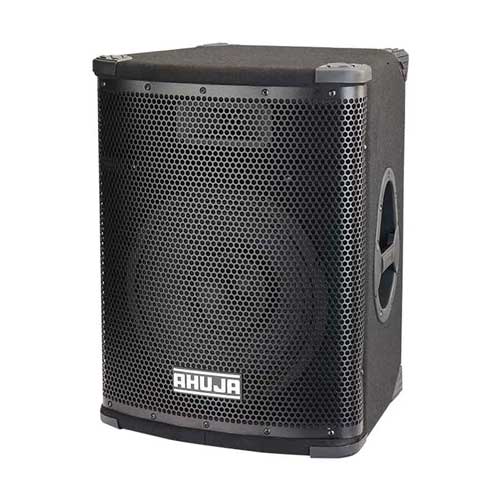
Ahuja SRX-120DXM 100 Watt PA Speaker System

Ahuja SSA-350 350 Watts PA Mixer Amplifiers
Ahuja SSB-120 120 Watts PA Mixer Amplifiers

Ahuja SSB-80M 80 Watts PA Mixer Amplifiers
Ahuja SSB-60EM 60 Watts PA Mixer Amplifiers


