


Zebra TC78 Android Handheld Barcode Scanner
Regular Price:৳0.00Availability: SKU: 7.31.19.9204
Quick Overview
-
Support
Saturday – Thursday: 09 AM - 06 PM. -
Payment
Cash on Delivery | Card | Online Payment -
Shipping Cost
Inside Dhaka 100tk | Outside Dhaka 150tk -
Warranty Policy
Read More
Description
Zebra TC78 Android Handheld Barcode Scanner in Bangladesh
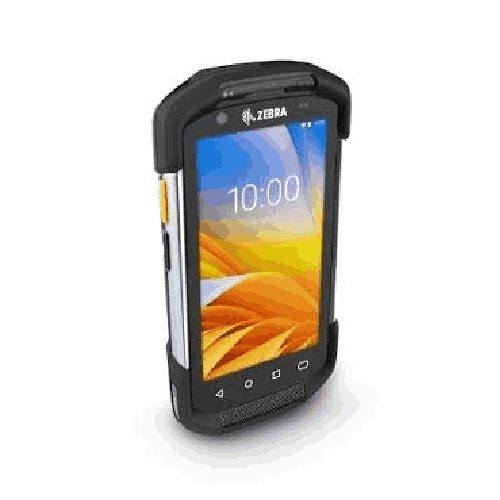
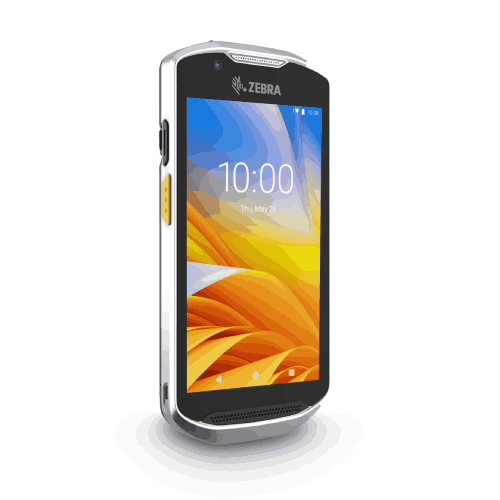
The Zebra TC78 Android Handheld Barcode Scanner falls into that category: an enterprise mobility device designed to support scan-first workflows across warehouse, retail back office, logistics, and field operations.
This product page is written for BME’s Bangladesh market and optimized for SEO/GEO/AI-search. It also follows your strict accuracy rule. You have not provided confirmed specifications for the TC78 (processor, RAM/storage, connectivity standards, scan engine, display, durability/IP rating, battery, camera, NFC, dimensions, weight, etc.). Therefore, this page avoids listing any unverified technical specifications. Instead, it provides a detailed, buyer-focused narrative and deployment guidance that remains true without guessing. If you share the TC78 datasheet specs, I can generate a fully spec-rich 2500+ word page with exact details.
What a Zebra TC78 is used for (in practical terms)
Many buyers search “Zebra TC78” because they want a device that can do three jobs at once:
- Scan barcodes as part of daily work
- Run Android apps for inventory, delivery, or warehouse workflows
- Stay mobile so workers can perform tasks at the point of activity
That matters because most errors happen in the gap between physical work and system updates. If a worker picks items and then later updates the system, mistakes appear. If the worker scans and updates instantly, data stays closer to reality.
Why scan-first workflows matter in Bangladesh
Bangladesh businesses often struggle with operational friction that looks small, but adds up:
- Staff re-checking inventory because “system stock is not sure”
- Wrong picks causing returns and customer complaints
- Dispatch delays due to manual verification
- Cycle counts taking too long, so they don’t happen often enough
- Branch transfers creating confusion about what actually moved
A handheld Android scanner helps solve these issues by enabling scan-and-confirm at each step. It supports process discipline: receiving → put-away → picking → packing → dispatch.
Bangladesh use cases where TC78-class handhelds fit well
Even without model-level specs, the use-case fit is clear for a Zebra Android handheld scanner.
1) Warehouse receiving and put-away
Workers can scan incoming cartons/items and confirm storage location. This reduces misplaced stock and speeds up availability.
2) Picking and packing for eCommerce fulfillment
Scan verification reduces wrong shipments, which is critical for online sellers in Bangladesh where returns are expensive and trust is everything.
3) Courier hub sorting and scanning
Sorting centers rely on constant scanning. A handheld device supports mobility around sorting lines and staging areas.
4) Retail chain back-office stock control
Mobile cycle counting helps keep system stock and physical stock closer, improving replenishment decisions and reducing stockouts.
5) Distribution route support (workflow dependent)
If your software supports mobile workflows, handheld devices help field teams scan, confirm deliveries, and update status as they go.
6) Spare parts and technical inventory
Barcode verification prevents issuing the wrong part, which reduces delays and improves service performance.
1D/2D/QR barcode needs—what to confirm before buying
Not all handheld configurations are the same. Some variants may be 1D-only, while others support 1D/2D with QR codes. Since you didn’t provide the TC78 scanning specification, this page does not claim 1D/2D capability as guaranteed—despite the model often being associated with advanced scanning in many markets.
Before you order, confirm with BME:
- Do you need 1D only or 1D/2D + QR?
- Do you need standard range scanning, or long-range scanning for racks?
- Will you scan damaged labels, reflective packaging, or small barcodes (which may require stronger scanning options)?
Connectivity planning: the difference between “works” and “works well”
Handheld workflows feel smooth only when connectivity is reliable. In Bangladesh, common deployment issues include dead Wi‑Fi zones in aisles, weak coverage at loading bays, and congestion when many devices connect at once.
Before rollout, consider:
- Wi‑Fi survey for warehouse aisles, staging, and dispatch points
- Real-time vs offline mode (depends on your software)
- Charging routines so devices are always ready for shifts
- User access and security (who logs in, who can edit, who can only scan)
If your operation includes fieldwork, confirm whether the TC78 configuration you plan to purchase supports cellular data usage (not provided).
Android advantage: faster training and app flexibility
In Bangladesh, Android-based devices often have a training benefit: most staff are already familiar with touch navigation. That reduces onboarding time compared to unfamiliar proprietary systems.
Android also supports a wide variety of enterprise applications—inventory apps, delivery apps, WMS front-ends, and custom tools—so you can align the handheld with your exact workflow rather than forcing your workflow to match the device.
Implementation best practices (Bangladesh-proven approach)
A handheld deployment succeeds when it’s introduced like a process improvement, not a gadget purchase.
Step 1: Standardize labeling
Ensure item barcodes and location labels are consistent and scannable.
Step 2: Start with one workflow
Begin with receiving or cycle counts, then expand to picking and dispatch verification.
Step 3: Train for habits
Scan every time, at every checkpoint. Consistency builds trust in the system.
Step 4: Create device discipline
Charging station, device assignment, and simple damage reporting rules.
Step 5: Scale gradually
Add more users and more workflows once the first deployment is stable.
Maintenance and care (general, safe guidance)
- Keep scanning windows clean to maintain performance
- Store devices in a fixed location after shifts
- Avoid moisture exposure and rough handling beyond normal operational needs
- Keep software updates planned and controlled
- Use protective accessories if your environment is busy and devices are frequently dropped
Since ruggedness specs were not provided, this remains general.
How to choose the right TC78 package from BME
Because details vary by configuration, the smart buying approach is:
- Identify your workflow (warehouse-only, mixed warehouse+field, retail back office)
- Confirm the barcode types you must scan (1D/2D/QR)
- Confirm connectivity needs (Wi‑Fi, Bluetooth, cellular if needed)
- Choose the right accessories (charging cradle, holster, spare batteries if applicable)
- Confirm warranty terms and support expectations during purchase
BME can help verify the exact variant and suggest a configuration that fits your operation.
✅ Key Features
- Android Handheld Platform: Supports app-driven scanning workflows for mobile operations.
- Mobile Barcode Scanning Capability: Designed for scan-first execution in inventory and logistics tasks (configuration dependent).
- Warehouse Workflow Fit: Useful for receiving, put-away, picking, and dispatch verification routines.
- Retail Back-Office Use: Supports cycle counts and shelf/stockroom verification workflows.
- Logistics & Courier Suitability: Supports scanning workflows for sorting, staging, and dispatch operations.
- Process Standardization Support: Helps implement consistent scanning SOPs across shifts and branches.
- Scalable Deployment Potential: Suitable for growing operations needing repeatable mobile execution.
- Enterprise Mobility Ecosystem: Fits organizations that standardize devices across teams for consistent training.
✅ Usage / Applications
- Receiving and goods inward scanning workflows
- Put-away confirmation and bin location verification
- Picking and packing verification for order fulfillment
- Dispatch staging and shipment confirmation scanning
- Courier parcel scanning and sorting workflows
- Retail cycle counts and back-office inventory checks
- Branch stock transfer verification
- Returns processing and reverse logistics scanning
- Spare parts inventory issuing and verification
- Asset tagging audits (workflow dependent)
✅ Benefits of This Product?
- Helps reduce manual entry and transcription errors in daily operations
- Improves inventory accuracy by enabling point-of-work scanning and updates
- Reduces wrong picks and shipment mistakes with verification routines
- Speeds up cycle counts and audits, making them easier to perform regularly
- Supports scalable, repeatable SOPs across branches and teams
- Improves warehouse and dispatch productivity by reducing re-checking work
- Enables more responsive customer service through faster stock verification
- Supports a more modern, app-based operational workflow with Android
✅ Ideal For
The Zebra TC78 Android handheld barcode scanner is ideal for Bangladesh businesses that need mobile, app-driven scanning workflows across warehouses, distribution points, retail stockrooms, and logistics operations. It suits eCommerce fulfillment teams that want more accurate picking and packing, courier and logistics hubs that depend on frequent parcel scanning, and distribution centers that need faster receiving and dispatch verification.
It’s also a good match for retail chains aiming to improve stock accuracy through mobile cycle counting and branch transfer verification, and for spare parts/electronics inventory where barcode verification reduces costly mistakes. If your organization wants to standardize scan-first operations on an Android handheld platform, the Zebra TC78 is a strong choice—once you confirm the exact configuration (scan engine and connectivity) that matches your needs.
✅ Why Choose the Zebra TC78 Android Handheld Barcode Scanner?
The main reason to choose a device like the Zebra TC78 is to bring scanning and workflow execution to the point of action. In Bangladesh, many operational errors come from delayed system updates—work happens on the floor, updates happen later at a desk. A handheld Android scanner closes that gap by enabling real-time scan-and-confirm routines.
The TC78 is also chosen for standardization. When your teams use a consistent device platform, training becomes faster and processes become repeatable. That repeatability is what improves accuracy over time—receiving becomes consistent, picking becomes verifiable, and dispatch becomes accountable.
For growing businesses, the TC78 category supports scalability: more SKUs, more orders, more branches can be managed with less chaos when scanning habits and mobile workflows are embedded into daily work.
✅ Why Buy This Product from BME?
Handheld Android barcode scanners can vary significantly by configuration. Differences in scan engine (1D vs 2D), scanning range, connectivity options, and included accessories can affect whether the device fits your workflow from day one.
Business Machine & Equipment (BME) helps Bangladesh buyers source the right Zebra TC78 variant by aligning the device with your operational needs—warehouse vs retail vs logistics, your barcode formats, and your deployment scale. BME can also help with practical rollout planning: device quantities per shift, charging routines, and accessory considerations to keep uptime high.
If you want to buy the Zebra TC78 in Bangladesh with clearer configuration matching and procurement-friendly support, BME is a dependable seller.
✅ Buying Guide
Use this checklist to avoid buying the wrong configuration.
1) Confirm barcode types
Do you need 1D only, or 1D/2D with QR codes? Confirm your TC78 scan engine configuration before ordering.
2) Confirm scanning distance needs
If you scan high racks or pallets from a distance, ask for a long-range scanning configuration (if available). For close-range tasks, standard scanning is typically enough.
3) Check Android app compatibility
Confirm your WMS/ERP/inventory/delivery app is Android-compatible and optimized for handheld use.
4) Plan connectivity
Make sure Wi‑Fi coverage is strong in the zones where scanning happens. If field use is expected, confirm whether the device configuration supports cellular data (if required).
5) Plan charging and accessories
Decide whether you need cradles, holsters, or other accessories for multi-shift use.
6) Standardize labels and SOPs
Standard label quality and “scan every checkpoint” rules are essential for consistent results.
Common mistakes to avoid
- Buying without confirming 1D/2D scan configuration
- Weak Wi‑Fi coverage causing delays and workarounds
- No charging routine leading to downtime
- Inconsistent labeling that reduces scan success
✅ Customers Ask About / Frequently Asked Questions
1) Is the Zebra TC78 a barcode scanner or a mobile computer?
It is an Android handheld mobile computer with barcode scanning capability.
2) Does the Zebra TC78 scan 2D and QR codes?
It depends on the configuration. Please confirm the scan engine configuration with BME before purchase.
3) Can the TC78 be used for warehouse picking and inventory?
Yes. It is commonly used for receiving, picking, stock counting, and dispatch verification workflows with the right software setup.
4) Will it work with my WMS or ERP software?
It depends on your software’s Android compatibility and workflow design. Confirm with your software provider or BME.
5) Do I need Wi‑Fi to use the TC78?
Many workflows use Wi‑Fi for real-time updates. Some apps support offline use with later syncing.
6) Is it suitable for courier parcel scanning?
Yes, Android handhelds are widely used for parcel scanning and sorting workflows.
7) What accessories should I consider?
Charging solutions and carrying options can help in multi-shift operations. Confirm availability with BME.
8) Can it be used for retail cycle counting?
Yes. Handheld scanning can speed up cycle counts and improve stock accuracy.
9) What warranty can I expect in Bangladesh?
Warranty varies by seller and sourcing. Confirm BME’s current warranty policy during purchase.
10) What should I confirm before ordering?
Barcode types (1D/2D), scanning distance needs, app compatibility, connectivity plan, and charging routine.
✅ Why Buy This Product
If your business needs mobile scanning and real-time task execution across warehouse aisles, logistics hubs, retail stockrooms, or field operations, the Zebra TC78 Android handheld barcode scanner is a practical upgrade for Bangladesh. It supports scan-first workflows that reduce manual entry, reduce errors, and improve inventory truth—especially when integrated with your WMS/ERP/inventory software.
For eCommerce fulfillment, it improves pick accuracy. For logistics, it supports faster parcel verification. For retail chains, it supports cycle counting and stock visibility. In growing Bangladesh operations, a standardized handheld platform helps build repeatable processes that scale.
What is the price of Zebra TC78 Android Handheld Barcode Scanner in Bangladesh?
Write a review
Question Answer
Have question about this product? Get specific details about this product from expert.







ZEBRA DS4208 Handheld USB Barcode Scanner


