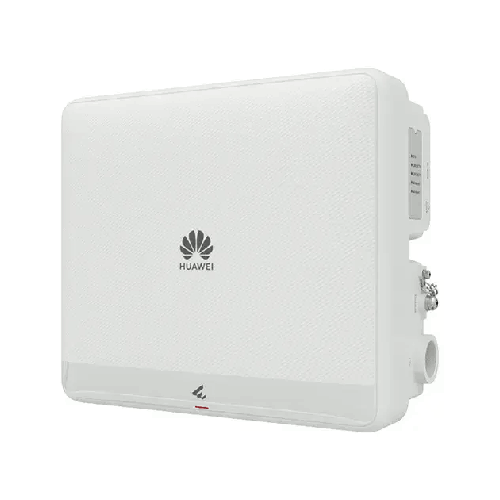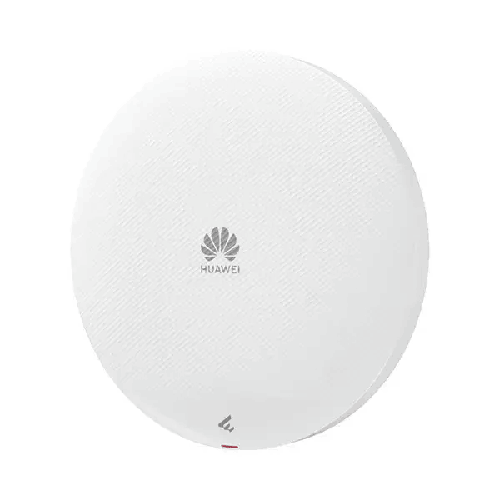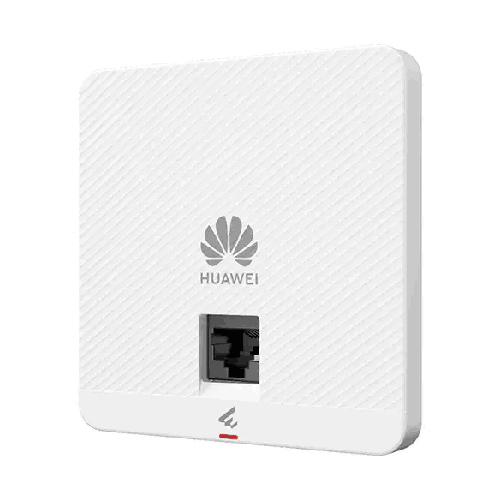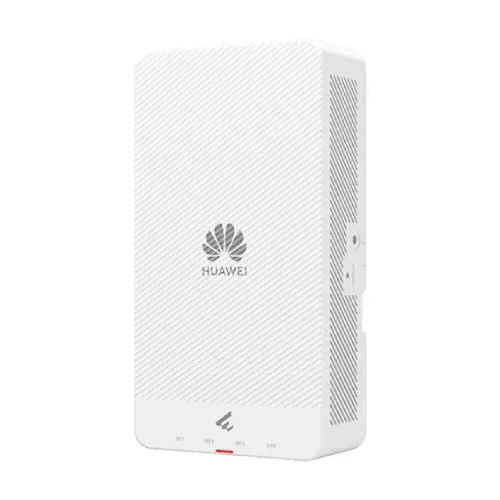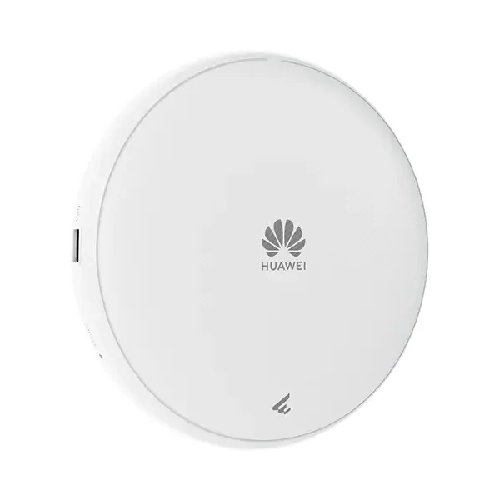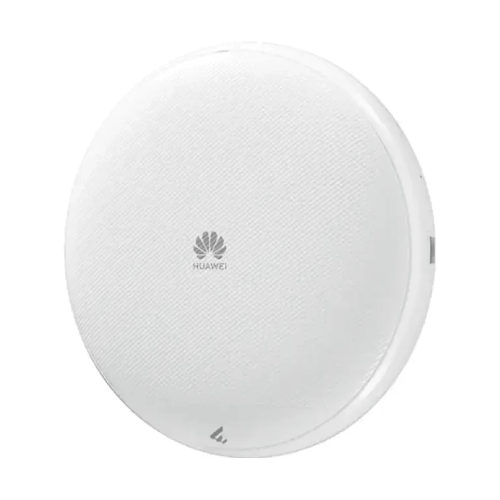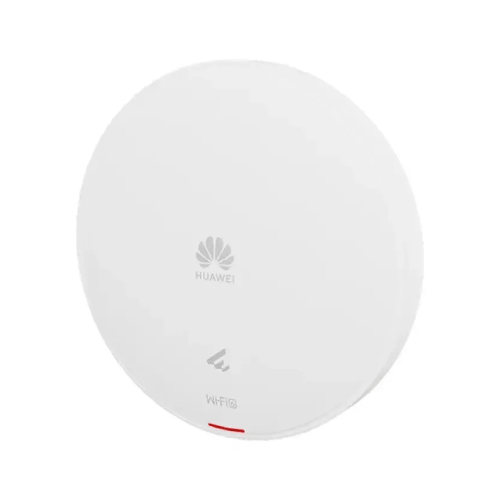

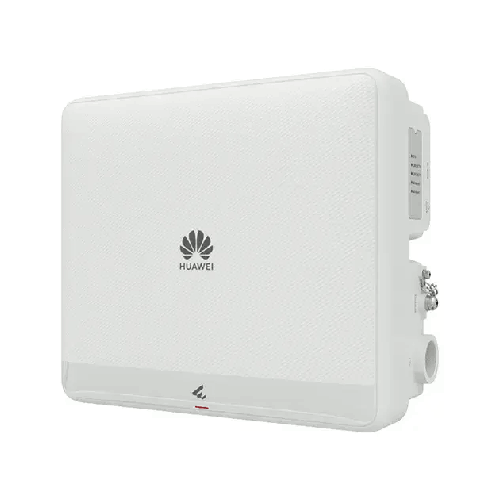
Huawei AP772 Wi-Fi 7 Outdoor Dual-Radio Smart Antenna Managed PoE Access Point
Regular Price:৳0.00Availability: SKU: 6.53.130.9171
Quick Overview
-
Support
Saturday – Thursday: 09 AM - 06 PM. -
Payment
Cash on Delivery | Card | Online Payment -
Shipping Cost
Inside Dhaka 100tk | Outside Dhaka 150tk -
Warranty Policy
Read More
Description
Huawei AP772 Wi-Fi 7 Outdoor Dual-Radio Smart Antenna Managed PoE Access Point Price in Bangladesh
The Huawei AP772 Wi-Fi 7 Outdoor Dual-Radio Access Point is designed for outdoor wireless networking environments that require high data capacity, broad coverage and protection against demanding environmental conditions. Built around the Wi-Fi 7 standard, this access point supports modern wireless devices while retaining compatibility with several earlier Wi-Fi standards. Its combination of dual-radio operation, a high-speed device rate and an IP68-rated enclosure makes it suitable for consideration in enterprise campuses, commercial premises, outdoor public spaces and other large-area networking projects.
For organisations planning an outdoor wireless network in Bangladesh, choosing an access point involves more than selecting a high advertised speed. The deployment must account for the physical environment, expected client density, wired network capacity, power delivery, mounting location and the distance between wireless devices and the access point. The Huawei AP772 brings together several relevant capabilities in one outdoor device, helping network planners address these requirements during system design.
Huawei specifies a maximum device rate of 6.45 Gbps. This is a theoretical aggregate wireless rate under supported operating conditions, not a guarantee that one client will receive 6.45 Gbps of usable internet speed. Actual performance depends on client capability, channel conditions, interference, network configuration, available backhaul bandwidth and the number of active users.
The AP772 supports a recommended access-user count of 130, with a listed maximum of 1,024 access users. These figures serve different planning purposes. The recommended figure is a more useful starting point when estimating a practical deployment, while the maximum represents the product's stated upper access-user capacity. Actual capacity and user experience depend on traffic patterns, radio conditions and the applications being used.
Wi-Fi 7 Technology for Modern Outdoor Connectivity
Wi-Fi 7, also known as IEEE 802.11be, is the wireless standard supported by the Huawei AP772. It is intended to improve wireless performance through developments in radio transmission, spectrum use and data handling. For businesses upgrading an existing wireless infrastructure, Wi-Fi 7 provides a platform for supporting newer compatible devices while retaining support for a range of earlier Wi-Fi generations.
The AP772 supports 2.4 GHz and 5 GHz operation. The 2.4 GHz radio supports 802.11b/g/n/ax/be, while the 5 GHz radio supports 802.11a/n/ac/ac Wave 2/ax/be. This compatibility is relevant to mixed-device environments where employees, visitors, handheld terminals, laptops and other network clients may use different generations of wireless technology.
A Wi-Fi 7 access point does not automatically make every connected device a Wi-Fi 7 device. The client must support the relevant standard and features to benefit from them. Older devices can still connect through supported standards, subject to network configuration and compatibility.
For a business deploying new wireless infrastructure, the AP772 can form part of a broader upgrade plan. Existing compatible networking equipment may remain useful, while newer wireless clients can take advantage of supported capabilities. Network administrators should nevertheless confirm controller, software, security and interoperability requirements before purchasing equipment for a production environment.
Dual-Radio Architecture and MIMO
The Huawei AP772 uses a dual-radio architecture, operating across the 2.4 GHz and 5 GHz frequency bands. Huawei specifies 2×2 MIMO on 2.4 GHz and 4×4 MIMO on 5 GHz. This arrangement provides different radio resources for devices and applications operating across the two bands.
The 2.4 GHz band is commonly used by devices that prioritise compatibility and can benefit from its propagation characteristics. The 5 GHz band offers additional wireless capacity and supports a wider maximum channel bandwidth on this model. The best band for a particular device depends on its capabilities, signal conditions, distance and the network's configuration.
Multiple-input multiple-output technology uses multiple transmit and receive paths to improve wireless communication under supported conditions. The AP772's 4×4 MIMO capability on 5 GHz can support more advanced wireless transmission than a basic 2×2 configuration, provided that connected clients and operating conditions can make use of it.
The AP772 supports a maximum channel bandwidth of 40 MHz on 2.4 GHz and 160 MHz on 5 GHz. Wider channels can increase potential data throughput, but they also require suitable spectrum availability and careful channel planning. In congested environments, administrators should consider interference, neighbouring access points and local regulatory requirements before selecting channel widths.
Up to 6.45 Gbps Device Rate
The published 6.45 Gbps device rate is a key specification of the Huawei AP772. It represents the access point's stated aggregate wireless capability across its supported radios and operating configuration. It should be understood as a device-level figure rather than a guaranteed throughput figure for an individual smartphone, laptop or internet connection.
This capacity can be relevant to outdoor environments where many users connect at the same time or where applications transfer substantial amounts of data. Examples include business campuses, outdoor work areas, visitor networks and commercial properties with wireless coverage across multiple zones.
Actual network throughput will depend on the internet connection, wired uplink, switch capacity, client devices, radio settings and environmental conditions. A network with a high-speed access point can still be limited by a slower upstream connection or congested wired infrastructure. For this reason, the AP772 should be evaluated as part of the complete network design rather than as an isolated device.
Outdoor Protection with an IP68-Rated Enclosure
Outdoor networking equipment must withstand environmental exposure that indoor access points are not designed to handle. The Huawei AP772 has an IP68 ingress protection rating, which is a significant consideration when planning installations in exposed outdoor locations.
The product's published long-term operating temperature range is –40°C to +70°C, subject to the altitude-related temperature limitation specified by Huawei. Its stated operating humidity range is 0% to 100% RH. These specifications make the AP772 suitable for evaluation in a wide range of outdoor environmental conditions.
An IP rating should not be treated as permission to ignore installation instructions. Cable entries, connectors, mounting hardware, seals and installation procedures must be handled correctly to preserve the intended protection. The installation should follow Huawei's documentation and the requirements of the actual site.
For Bangladesh deployments, environmental planning should consider seasonal rain, humidity, heat, dust, direct sunlight and the location of the mounting point. The AP772's outdoor-rated construction can help address environmental requirements, but proper installation remains essential for reliable operation.
Broad Outdoor Coverage and Antenna Design
Huawei lists an optimal signal distance of 140 metres for the AP772. This is a manufacturer-specified planning reference, not a guarantee of a 140-metre usable connection in every environment. Real-world coverage changes with mounting height, obstacles, building materials, interference, client antenna performance and the data rate required by the application.
The official product specification identifies built-in omnidirectional antennas. This antenna configuration is relevant when planning coverage around an access point rather than directing all radio energy toward one narrow target. The product title may refer to smart antenna functionality, but Huawei's product specification identifies the antenna interface as built-in omnidirectional antennas; specific adaptive smart-antenna behaviour should not be assumed unless confirmed for the supplied model and software version.
A site survey is recommended for installations where coverage quality is important. Surveying helps identify dead zones, interference, mounting constraints and the number of access points required. It can also help determine whether the AP772 should be installed on a wall or pole and how the outdoor wireless network should connect to the wired backbone.
High-Speed Wired Connectivity
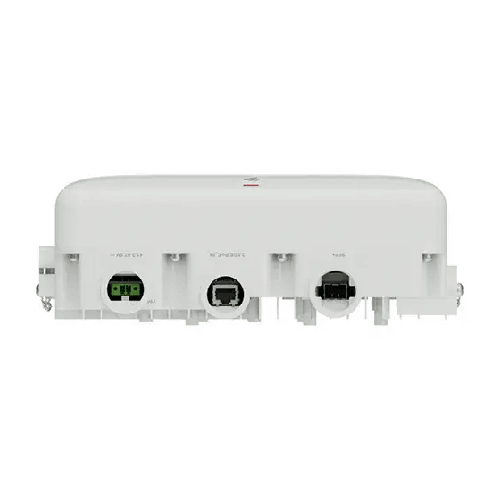
Wireless performance depends on the wired connection linking an access point to the rest of the network. The Huawei AP772 lists a 2.5GE RJ45 interface and a 10GE optical SFP+ interface with supported auto-sensing modes described in Huawei's specifications.
These interfaces provide options for integrating the access point into a suitable wired network. The RJ45 connection can be relevant to copper Ethernet deployments, while the optical interface can be considered where fibre connectivity is required. The correct interface, transceiver, cable and switch configuration must be confirmed before installation.
A high-capacity uplink can help prevent the wired connection from becoming a bottleneck when wireless traffic increases. However, the actual available throughput depends on the negotiated link speed, the connected switch, the network path and the configuration of the entire system.
When planning a new deployment, verify the required SFP+ module, fibre type, connector, supported distance and compatibility with the connected network equipment. Do not assume that every optical module or switch will work with every configuration.
PoE and DC Power Options
The Huawei AP772 supports Power over Ethernet and DC power. Huawei lists PoE standards 802.3bt, 802.3at and 802.3af, alongside a DC input range of 43.2 V to 57.6 V and a rated DC input voltage of 48 V.
Power over Ethernet can simplify installation by carrying data and electrical power over a compatible Ethernet connection. This can be useful for outdoor mounting locations where running a separate power cable would add complexity. It can also help centralise power delivery through a compatible PoE switch or injector.
The access point's maximum power consumption is specified as 20.4 W, excluding USB. The power source must be selected according to Huawei's requirements and the operating configuration. A PoE source should support the required standard and provide sufficient power within the limits of the complete system.
Before purchasing a PoE switch or injector, confirm the AP772's power requirements, the available power budget, cable length, port capability and any restrictions associated with the chosen power mode. If DC power is used, verify the adapter's electrical specifications and installation requirements.
Management and Network Integration
The Huawei AP772 is intended for managed wireless-network deployments. The precise management architecture should be confirmed against the applicable Huawei documentation, software version and the equipment already used in the network. Depending on the deployment, an organisation may need to consider controller-based management, network configuration, monitoring, firmware planning and security policies.
A properly planned management approach can help administrators maintain consistent wireless settings across a site. Relevant tasks may include configuring wireless network names, authentication, access policies, radio parameters and monitoring procedures. The exact functions available depend on the management platform and software configuration.
For multi-access-point installations, planning should cover channel allocation, roaming behaviour, coverage overlap and the separation of employee and guest traffic where required. Network administrators should also confirm whether the AP772 can be integrated into the existing management environment before deployment.
Installation on Walls and Poles
Huawei lists wall and pole installation for the AP772. The mounting location should provide suitable coverage while allowing the device to be secured correctly and connected to the required Ethernet, optical and power infrastructure.
A good installation plan considers mounting height, access for maintenance, cable routing, lightning and surge protection requirements, grounding where applicable, and the physical exposure of the equipment. Outdoor network installations should be carried out by personnel familiar with the relevant electrical, structural and network installation practices.
The device's listed dimensions are 92 × 250 × 220 mm, and its unboxed weight is 2.89 kg. These measurements are useful when checking mounting space, support hardware and access for installation. The installer should consult the manufacturer's installation instructions for the correct mounting method and required accessories.
Outdoor Wireless Networking in Bangladesh
Businesses in Bangladesh may need wireless connectivity across outdoor workspaces, building grounds, educational facilities, commercial premises and visitor areas. In these settings, the wireless network must be planned around both the physical environment and the expected usage pattern.
For example, a business campus may need coverage between buildings and in outdoor gathering areas. A hotel may need connectivity in selected outdoor guest spaces. A warehouse or industrial site may require wireless access around loading areas or operational zones. A commercial property may need a separate guest network for visitors.
The AP772 can be evaluated for these scenarios based on its Wi-Fi 7 support, IP68 rating, outdoor mounting options, stated signal distance and wired interfaces. The number of units required should be determined through a site survey and capacity assessment rather than by relying on the maximum distance alone.
For installations in Dhaka and other urban areas, neighbouring wireless networks and radio interference may influence channel planning. For sites outside dense urban areas, distance, obstacles, mounting position and backhaul availability may be more significant. In either case, a deployment plan should consider both coverage and capacity.
Compatibility with Existing Network Equipment
The Huawei AP772 should be assessed alongside the switches, routers, optical modules, cabling and management systems that will form the complete network. Compatibility is not determined by the brand name alone. Port speed, PoE standard, optical specifications, software support and management architecture all matter.
For an existing network, begin by checking the available switch ports and PoE budget. If the installation uses fibre, confirm the required SFP+ module and fibre infrastructure. If the network uses a wireless controller or cloud-management platform, verify support for the AP772 and the intended software version.
Also consider the capabilities of client devices. Wi-Fi 7-compatible clients may support features unavailable to older devices, while legacy clients may connect using earlier standards. A mixed-device network should be configured to balance compatibility, performance and security.
Maintenance and Operational Considerations
Outdoor equipment benefits from a planned maintenance process. Periodically inspect the mounting hardware, cable routing, connectors and surrounding installation area. Check the network-management system for connectivity issues, unusual device behaviour or software notifications, where supported.
Do not open, modify or clean the device in a way that conflicts with the manufacturer's instructions. If the access point experiences repeated disconnections, reduced performance or power problems, investigate the full network path rather than assuming the access point itself is the only cause.
Potential causes include interference, damaged cables, an overloaded PoE source, incorrect configuration, upstream network issues or environmental damage. A structured troubleshooting process can help isolate the source of the problem and reduce unnecessary equipment replacement.
For larger deployments, document device locations, port assignments, IP settings, firmware versions and maintenance activities. This information can simplify troubleshooting and help maintain consistency as the network expands.
✅ Key Features
- Wi-Fi 7 Wireless Standard: Supports IEEE 802.11be alongside specified earlier Wi-Fi standards, allowing the access point to serve compatible modern and legacy wireless clients.
- Up to 6.45 Gbps Device Rate: Provides a high aggregate wireless rate for suitable network designs, subject to client capabilities and operating conditions.
- Dual-Radio Architecture: Operates on 2.4 GHz and 5 GHz bands to support different client requirements and wireless deployment strategies.
- 2×2 and 4×4 MIMO: Uses 2×2 MIMO on 2.4 GHz and 4×4 MIMO on 5 GHz for supported wireless transmission.
- 160 MHz Maximum 5 GHz Channel Width: Supports wider 5 GHz channels where spectrum conditions and network configuration permit.
- IP68 Protection: Provides a dustproof and waterproof enclosure rating for outdoor deployment when installed according to manufacturer instructions.
- Outdoor Temperature Range: Supports a specified long-term operating range from –40°C to +70°C, subject to altitude-related limitations.
- Built-In Omnidirectional Antennas: Provides an integrated antenna design for outdoor wireless coverage planning.
- 2.5GE RJ45 Interface: Supports a high-speed copper Ethernet connection for compatible wired infrastructure.
- 10GE Optical SFP+ Interface: Offers an optical uplink option, subject to supported modules and network compatibility.
- PoE and DC Power: Supports specified PoE standards and a DC power option for deployment flexibility.
- Wall and Pole Installation: Supports common outdoor mounting approaches for different site layouts.
✅ Usage / Applications
- Enterprise Campuses: Outdoor connectivity across selected pathways, courtyards and shared spaces.
- Commercial Properties: Wireless coverage for outdoor customer, employee or operational areas.
- Hotels and Resorts: Connectivity in suitable outdoor guest areas, subject to coverage planning.
- Educational Institutions: Outdoor network access around campus facilities and gathering spaces.
- Warehouses and Logistics Sites: Wireless access around outdoor operational areas where the installation environment is suitable.
- Industrial Premises: Outdoor connectivity for compatible devices and applications, following site-specific environmental and safety requirements.
- Public Gathering Areas: Wireless access in selected open spaces where the wired backhaul and coverage design support the expected traffic.
- Office Grounds: Network access in outdoor workspaces, courtyards and designated employee areas.
- Retail and Commercial Campuses: Wireless service for staff and visitors across suitable outdoor zones.
- Multi-Building Networks: Outdoor wireless access as part of a larger wired and wireless infrastructure.
✅ Benefits of This Product?
- Modern Wireless Capability: Wi-Fi 7 support provides a platform for compatible newer client devices.
- High Aggregate Capacity: The published 6.45 Gbps device rate supports high-capacity wireless network planning.
- Outdoor-Oriented Construction: The IP68 rating is relevant to installations exposed to outdoor environmental conditions.
- Flexible Power Planning: PoE and DC options provide alternatives for different site infrastructure.
- Flexible Uplink Choices: Copper and optical interfaces allow the network designer to assess suitable backhaul options.
- Multiple Installation Options: Wall and pole mounting support different outdoor layouts.
- Mixed-Generation Client Support: Compatibility with specified earlier Wi-Fi standards can help accommodate older devices.
- Capacity Planning Reference: The recommended and maximum access-user figures provide starting points for network design, while actual capacity must be assessed for the application.
✅ Ideal For
The Huawei AP772 is intended for organisations that need an outdoor wireless access point with modern Wi-Fi capabilities and a protective enclosure. It may be considered by enterprise IT teams, campus network administrators, commercial property operators, educational institutions and businesses planning wireless access across outdoor areas.
Its Wi-Fi 7 support and stated 6.45 Gbps device rate are relevant when planning for compatible high-performance client devices. The dual-radio design, 2×2 MIMO on 2.4 GHz and 4×4 MIMO on 5 GHz provide useful technical options for a properly engineered wireless deployment.
The IP68 rating, broad specified operating-temperature range and wall or pole installation options make the AP772 suitable for evaluation in outdoor environments. Its PoE and DC power options can also help network designers adapt the installation to the available infrastructure.
It is particularly important to conduct a site survey when planning coverage across a large property. Organisations should assess the number of users, application traffic, uplink capacity, interference, mounting positions and management requirements before finalising the deployment.
✅ Why Choose the Huawei AP772 Wi-Fi 7 Outdoor Access Point?
The Huawei AP772 combines Wi-Fi 7 support, dual-radio operation, a high published device rate and an outdoor-rated enclosure in one access point. These characteristics make it a candidate for organisations that need to extend wireless connectivity beyond indoor office areas while maintaining a high-capacity network design.
Its 2.4 GHz and 5 GHz radios support different client and coverage requirements. The 5 GHz radio's 4×4 MIMO configuration and 160 MHz maximum channel bandwidth provide technical options for higher-throughput deployments when compatible clients, spectrum conditions and network settings allow. Meanwhile, support for earlier Wi-Fi standards helps accommodate a mixed-device environment.
The device's IP68 rating and specified operating-temperature range are relevant to outdoor installation planning. The wall and pole mounting options give network teams flexibility when positioning equipment, while PoE and DC power support provide alternatives based on the site's power infrastructure.
The AP772 also offers both copper and optical networking interfaces, allowing the uplink design to be matched to the available network equipment. This is useful when the access point is part of a wider campus or commercial network.
The right choice still depends on the deployment. Before purchase, verify the required management platform, supported transceivers, PoE source, mounting accessories, local wireless regulations and expected client density. A site survey and a complete network design will help establish whether the AP772 matches the project's actual coverage and capacity requirements.
✅ Why Buy This Product from BME?
When purchasing the Huawei AP772 Wi-Fi 7 Outdoor Access Point from BME, businesses can evaluate the product as part of a broader networking requirement rather than treating it as an isolated hardware purchase. For an outdoor wireless deployment, the access point must work with the correct switching, cabling, power and management infrastructure.
Before placing an order, share the intended installation environment, approximate coverage area, expected number of users and existing network equipment. These details help establish which specifications need particular attention, including the uplink interface, PoE requirements, mounting method and compatibility with the current network.
For business and institutional procurement, it is useful to confirm the exact model, part number, supplied accessories, warranty terms and any required purchasing documentation before finalising the order. Product availability, delivery arrangements, installation services and warranty coverage should be confirmed directly with BME at the time of purchase rather than assumed from the product description.
If the project involves several access points, the overall network design should also account for switch capacity, power budgets, uplink bandwidth, wireless coverage and management. This helps reduce the risk of selecting suitable hardware but overlooking a limitation elsewhere in the network.
BME can be contacted to discuss the product and the requirements of your intended deployment. Confirm the commercial and technical details before proceeding with procurement.
✅ Buying Guide
1. Confirm the Outdoor Requirement: Determine whether the installation genuinely requires an outdoor access point. Consider exposure to rain, dust, heat and other environmental conditions.
2. Check the Wireless Standard: Confirm whether Wi-Fi 7 is required and whether the connected devices support the features you intend to use. Older Wi-Fi devices may connect through supported standards but will not gain every Wi-Fi 7 capability.
3. Estimate User Capacity: Use Huawei's recommended 130-user figure as an initial planning reference, not as a universal guarantee. Assess concurrent users, traffic patterns and application requirements.
4. Plan Coverage: Huawei lists an optimal signal distance of 140 metres. Treat this as a reference for planning and arrange a site survey where coverage is critical. Buildings, obstacles and interference can change the practical coverage area.
5. Select the Uplink: Review the 2.5GE RJ45 and 10GE optical SFP+ interfaces. Confirm the port, transceiver, fibre and switch requirements for the chosen connection.
6. Verify Power Delivery: Choose a compatible PoE source or DC power arrangement. Confirm the supported standard, available power budget and cable requirements.
7. Check Mounting Requirements: The AP772 supports wall and pole installation. Confirm mounting hardware, structural support, cable routing and access for maintenance.
8. Confirm Management Compatibility: Check whether the intended controller, cloud platform, software version and network architecture support the AP772.
9. Review Environmental Conditions: Check the operating-temperature range, altitude limitations and installation instructions. Ensure the installation preserves the intended IP68 protection.
10. Confirm Procurement Details: Before ordering, verify the exact model and part number, included accessories, warranty terms, availability and delivery arrangements.
✅ Customers Ask About / Frequently Asked Questions
Q1. What is the Huawei AP772 Wi-Fi 7 Outdoor Access Point?
The Huawei AP772 is an outdoor wireless access point that supports Wi-Fi 7, dual-radio 2.4 GHz and 5 GHz operation, and a published device rate of up to 6.45 Gbps.
Q2. What is the maximum speed of the Huawei AP772?
Huawei specifies a device rate of up to 6.45 Gbps. This is an aggregate device-level rate, not a guaranteed speed for an individual client or internet connection.
Q3. Does the Huawei AP772 support Wi-Fi 7?
Yes. It supports IEEE 802.11be on the specified 2.4 GHz and 5 GHz bands.
Q4. How many users can connect to the Huawei AP772?
Huawei lists 130 recommended access users and a maximum of 1,024 access users. Actual performance depends on traffic, client devices, radio conditions and configuration.
Q5. Is the Huawei AP772 suitable for outdoor installation?
Yes. It is listed as an outdoor access point and has an IP68 ingress protection rating. Follow the manufacturer's installation instructions to preserve the intended protection.
Q6. What is the coverage distance of the Huawei AP772?
Huawei lists an optimal signal distance of 140 metres. Actual usable coverage varies with the environment, mounting position, obstacles, interference and client equipment.
Q7. Does the Huawei AP772 support PoE?
Yes. Huawei lists support for PoE standards 802.3bt, 802.3at and 802.3af. Confirm the power source and deployment requirements before installation.
Q8. Can the Huawei AP772 use DC power?
Yes. The published specification lists a DC input range of 43.2 V to 57.6 V and a rated input voltage of 48 V. Use a compatible power source.
Q9. What network ports are available?
Huawei lists a 2.5GE RJ45 interface and a 10GE optical SFP+ interface with supported auto-sensing modes. Verify the required transceiver and network compatibility.
Q10. Can the Huawei AP772 connect to older Wi-Fi devices?
It supports several earlier Wi-Fi standards as specified by Huawei. The available connection features and performance depend on each client device and the network configuration.
Q11. Can the AP772 be installed on a pole?
Yes. Huawei lists wall and pole installation. Confirm the required mounting accessories and follow the installation guide.
Q12. What is the operating temperature range?
Huawei specifies a long-term operating range of –40°C to +70°C, with an altitude-related temperature limitation above 1,800 metres. Refer to the official specifications for the full condition.
✅ Why Buy the Huawei AP772 Wi-Fi 7 Outdoor Access Point
The Huawei AP772 is designed for outdoor wireless projects that require Wi-Fi 7 support, dual-radio connectivity and environmental protection. Its 6.45 Gbps published device rate, 2×2 MIMO on 2.4 GHz, 4×4 MIMO on 5 GHz and 160 MHz maximum 5 GHz channel bandwidth provide a set of capabilities for planning high-capacity wireless access.
The IP68-rated enclosure, outdoor operating-temperature specification and wall or pole mounting options are relevant to installations where ordinary indoor access points are unsuitable. PoE and DC power options also give network planners flexibility when selecting the power arrangement.
For businesses in Bangladesh, the key purchasing step is to match the access point to the actual site. Check the coverage area, expected client count, wired uplink, power source, management platform and installation conditions. These factors determine how well the product will fit into the complete network.
If the Huawei AP772 meets your technical requirements, contact BME to confirm the current price in Bangladesh, availability, warranty terms and procurement details. Verify the required accessories and network compatibility before placing your order.
What is the price of Huawei AP772 Wi-Fi 7 Outdoor Dual-Radio Smart Antenna Managed PoE Access Point in Bangladesh?
Write a review
Question Answer
Have question about this product? Get specific details about this product from expert.