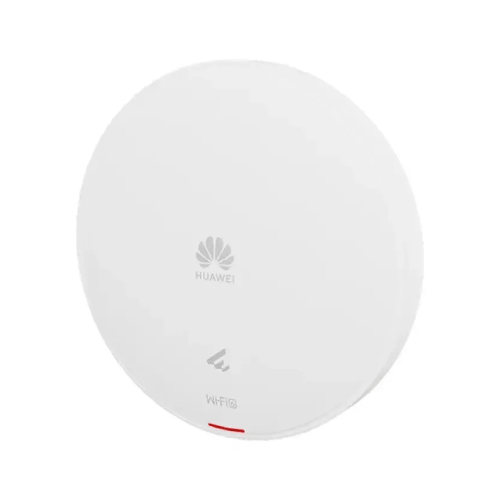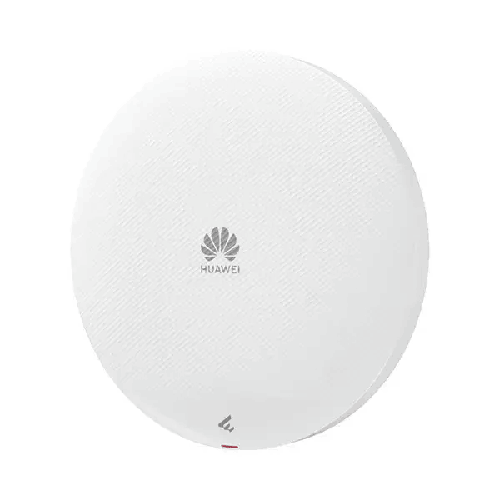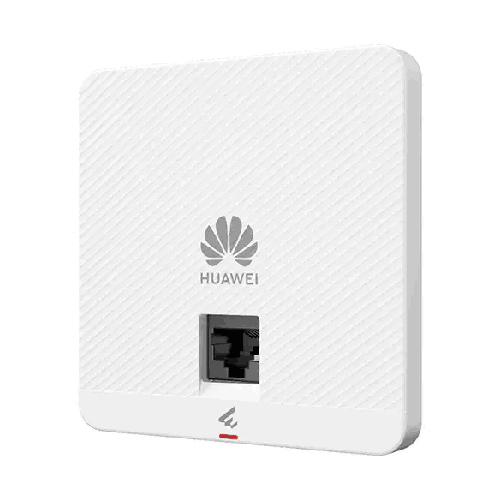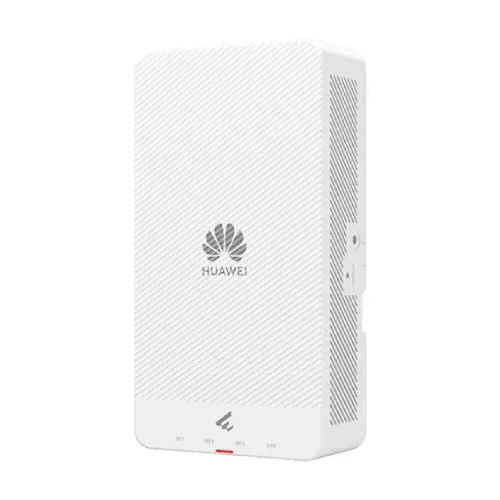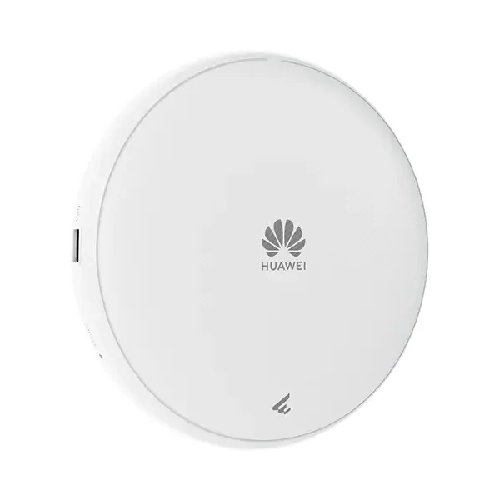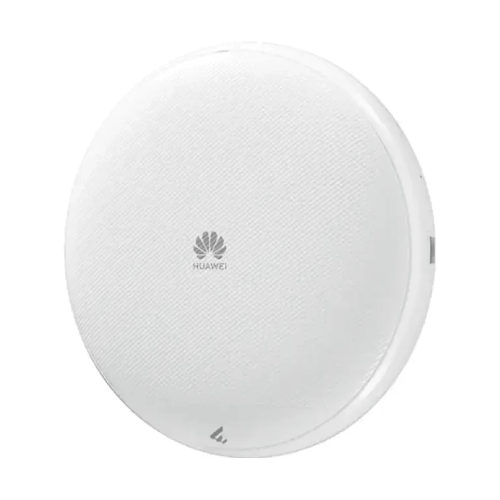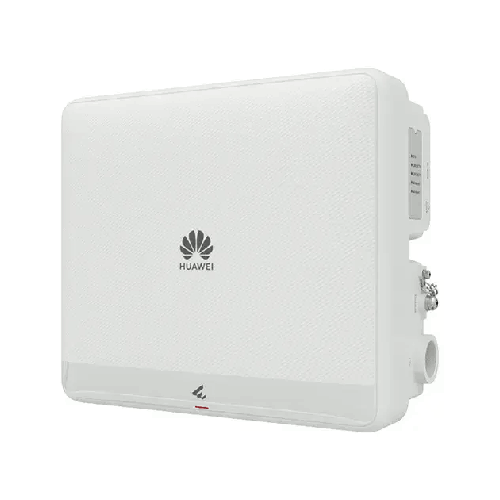

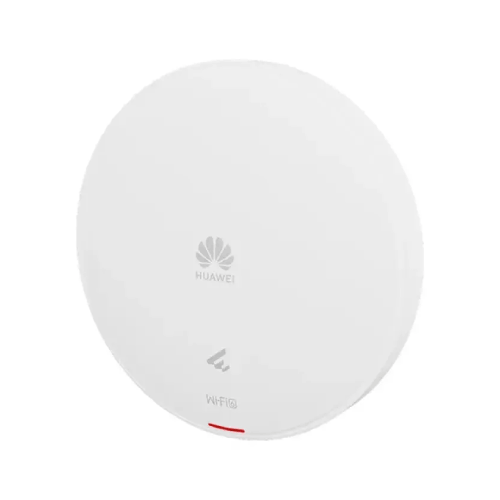
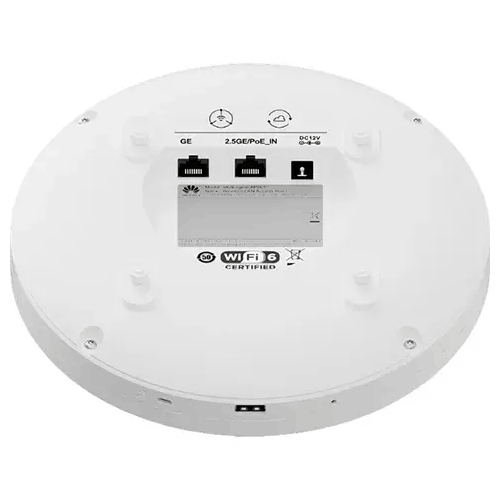
Huawei AP661 Wi-Fi 6 Tri-Radio Smart Antenna Managed PoE Settled/Ceiling Access Point
Regular Price:৳0.00Availability: SKU: 6.53.130.9170
Quick Overview
-
Support
Saturday – Thursday: 09 AM - 06 PM. -
Payment
Cash on Delivery | Card | Online Payment -
Shipping Cost
Inside Dhaka 100tk | Outside Dhaka 150tk -
Warranty Policy
Read More
Description
Huawei AP661 Wi-Fi 6 Tri-Radio Smart Antenna Managed PoE Settled/Ceiling Access Point Price in Bangladesh
The Huawei eKitEngine AP661 Wi-Fi 6 Tri-Radio Smart Antenna Access Point is a high-capacity indoor wireless access point designed for environments where many users need reliable Wi-Fi connectivity and where wireless coverage, capacity, and uplink performance are important. Huawei identifies the AP661 as a Wi-Fi 6 settled AP with a device rate of up to 6.575 Gbps, three radios, built-in smart antennas, a recommended access-user count of 300, and a maximum access-user count of 1,536.
Unlike a conventional dual-radio Wi-Fi 6 access point, the AP661 uses a three-radio architecture consisting of one 2.4 GHz radio and two 5 GHz radios. The 2.4 GHz radio uses 2×2 MIMO, while the two 5 GHz radios use 2×2 and 4×4 MIMO respectively. Huawei's official datasheet states that the AP can provide services simultaneously across these three radios and achieve a combined device rate of up to 6.575 Gbps.
This architecture makes the AP661 particularly relevant to environments where a large number of wireless clients may be active at the same time. Huawei specifically identifies scenarios such as offices, education environments, and high-density spaces for this class of access point. Huawei's eKit materials also position the AP661 for meeting rooms, training centers, classrooms, hotels, and commercial environments.
Another defining characteristic is Huawei's built-in smart antenna technology. Rather than relying only on a conventional fixed antenna pattern, the AP661 uses an intelligent antenna design and switching algorithm to adapt coverage direction and signal strength according to the surrounding environment and client distribution. Huawei states that this technology helps provide accurate coverage, improve signal quality, and suppress interference.
The AP661 also provides a 2.5GE RJ45 port and a 100M/1000M/2.5G auto-sensing RJ45 port, giving it a useful wired connectivity foundation for modern network infrastructure. It supports 802.3at/af PoE, allowing the access point to receive power through the Ethernet infrastructure when deployed with a compatible PoE network.
✅ Wi-Fi 6 802.11ax Technology
The Huawei AP661 is built around the Wi-Fi 6 / IEEE 802.11ax standard. Huawei's official documentation identifies support for 802.11b/g/n/ax on 2.4 GHz and 802.11a/n/ac/ac Wave 2/ax on 5 GHz.
Wi-Fi 6 is designed to improve wireless efficiency in environments containing many connected devices. Technologies such as OFDMA, MU-MIMO, 1024-QAM, BSS coloring, and Target Wake Time are part of the Wi-Fi 6 feature set described by Huawei for the AP661.
For business users, the importance of Wi-Fi 6 is not simply the theoretical maximum speed. In practical installations, wireless performance is affected by the number of clients, channel availability, interference, client capabilities, distance, walls, network configuration, and upstream bandwidth.
The AP661's Wi-Fi 6 architecture therefore provides a foundation for deploying a modern wireless LAN where multiple users and devices need simultaneous access.
✅ Tri-Radio Architecture
One of the AP661's most distinctive characteristics is its three-radio configuration.
The three radios consist of:
- 2.4 GHz with 2×2 MIMO
- 5 GHz high-frequency radio with 2×2 MIMO
- 5 GHz low-frequency radio with 4×4 MIMO
Huawei specifies a maximum channel bandwidth of 40 MHz on 2.4 GHz, 80 MHz on the 5 GHz high-frequency radio, and 160 MHz on the 5 GHz low-frequency radio.
This gives the AP661 a larger radio resource than a basic two-radio access point. The additional 5 GHz radio can be valuable in environments where many clients compete for wireless airtime.
Huawei's datasheet states that the AP supports a maximum of eight spatial streams, consisting of two on 2.4 GHz and six across the two 5 GHz radios.
For high-density environments, this architecture can help distribute wireless traffic across multiple radio resources rather than concentrating all clients on only one 5 GHz radio.
✅ Up to 6.575 Gbps Device Rate
Huawei specifies a maximum device rate of 6.575 Gbps for the AP661.
The theoretical radio rates are based on the combined capabilities of the three radios. Huawei's datasheet identifies up to approximately 0.575 Gbps on 2.4 GHz and 6 Gbps across the 5 GHz radios, resulting in the stated 6.575 Gbps device rate.
This figure should be understood as the AP's specified aggregate wireless device rate rather than the guaranteed speed of an individual client.
Individual client performance depends on the client's Wi-Fi generation, antenna configuration, channel width, signal conditions, interference, protocol overhead, and other network factors.
Nevertheless, the 6.575 Gbps specification demonstrates that the AP661 is designed for substantially more wireless capacity than entry-level Wi-Fi access points.
✅ Built-In Smart Antenna Technology
The AP661 incorporates built-in smart antennas. Huawei describes a smart antenna array and intelligent switchover algorithm that can sense the application environment and access density and adjust coverage direction and signal characteristics accordingly.
This technology is particularly relevant when users move around a wireless coverage area. Huawei describes the smart antenna system as helping provide accurate and stable coverage as stations move.
The AP661 therefore does not need to be evaluated solely by conventional antenna gain figures. Its intelligent antenna architecture is an important part of the product's overall wireless design.
Huawei lists antenna gain values of 4 dBi per chain with 2 dBi combined gain on 2.4 GHz, 5 dBi per chain with 3 dBi combined gain on 5 GHz, and 4 dBi for BLE.
✅ High-Density Wireless Connectivity
Huawei recommends the AP661 for up to 300 access users, while the specified maximum number of access users is 1,536.
These figures should not be interpreted as a guarantee that every environment can deliver identical performance with that number of active users. Actual capacity depends on applications, traffic volume, client devices, RF conditions, channel configuration, and deployment density.
The recommended-user figure is more useful for network planning because it reflects Huawei's recommended access-user capacity for the product.
This makes the AP661 relevant to environments such as offices, classrooms, training centers, meeting rooms, hotels, and other locations where many users may connect simultaneously.
✅ MU-MIMO and OFDMA
The AP661 supports MU-MIMO and OFDMA, two important Wi-Fi 6 technologies for improving wireless spectrum utilization.
MU-MIMO enables an access point to communicate with multiple client devices simultaneously using multiple spatial streams. Huawei states that the AP661 supports MU-MIMO and up to eight spatial streams across its three radios.
OFDMA divides wireless resources into smaller resource units so that multiple client devices can be scheduled more efficiently. This is particularly useful when numerous clients are sending smaller amounts of data rather than one device continuously consuming the entire channel.
Together, these technologies contribute to the AP661's suitability for environments where wireless client density is more important than simply providing a high peak rate to one device.
✅ 160 MHz Channel Bandwidth
The AP661 supports up to 160 MHz channel bandwidth on its 5 GHz low-frequency radio. Huawei specifies 160 MHz maximum channel bandwidth for this radio, alongside 80 MHz for the second 5 GHz radio and 40 MHz for the 2.4 GHz radio.
A wider channel can provide more wireless bandwidth under appropriate RF conditions and when the client device also supports the required channel width.
However, 160 MHz operation is dependent on the available spectrum, regulatory conditions, interference environment, and client capabilities. Therefore, the presence of 160 MHz support does not mean every deployment should operate continuously at that width.
✅ 2.5GE Network Connectivity
The AP661 includes one 2.5GE RJ45 port and one 100M/1000M/2.5G auto-sensing RJ45 port.
The 2.5GE connectivity is important because a high-capacity Wi-Fi 6 access point can potentially exceed the practical limitations of a conventional 1GbE uplink in certain traffic conditions.
For network designers, a 2.5GbE-capable infrastructure can therefore provide additional wired uplink capacity between the access point and the switching layer.
The actual wired throughput depends on the connected switch, cabling, transceivers where applicable, network architecture, and negotiated Ethernet speed.
✅ PoE Power Support
The AP661 supports 802.3at/af PoE power. Huawei specifies a maximum power consumption of 21.2W excluding USB when powered through the supported PoE modes.
PoE can simplify ceiling and wall installation because a compatible Ethernet cable can provide both network connectivity and electrical power.
For a business deployment, this can reduce the need to install a separate electrical outlet close to every access point.
The upstream network switch or PoE injector must provide a compatible power standard and sufficient power budget. Buyers should therefore check the PoE specifications of the intended switch before deployment.
✅ Flexible Wall and Ceiling Installation
Huawei describes the AP661 as a settled AP and specifies installation on walls and ceilings, including several ceiling and mounting structures such as solid wall, gypsum board, spring tee, flat-edge T-rail, channel rail, beam, and threaded rod. It can also be installed through several junction-box configurations.
This flexibility makes the AP661 suitable for structured indoor wireless installations.
A ceiling-mounted position can be useful for providing broad wireless coverage across office floors, classrooms, meeting rooms, hotels, and similar indoor areas.
The exact mounting position should be selected based on the building layout, wall construction, client density, expected interference, and desired coverage.
✅ 30-Meter Optimal Signal Distance
Huawei specifies an optimal signal distance of 30 meters for the AP661.
This should be treated as a manufacturer-specified optimal signal-distance figure rather than a guarantee that every location within 30 meters will receive identical performance.
Building materials, reinforced concrete, partitions, furniture, other wireless networks, electromagnetic interference, client orientation, and local RF conditions can all influence actual coverage.
For professional installations, wireless site planning remains important even when the access point has a strong radio specification.
✅ Working Modes and Management
Huawei's official AP661 datasheet identifies three working modes: Fit, Fat, and cloud management.
This gives the AP661 flexibility in different wireless deployment architectures.
In a managed WLAN environment, access points can be incorporated into an appropriate wireless management architecture. The exact management method and available functions depend on the selected deployment mode and Huawei software/platform environment.
Therefore, while the AP661 can be used in managed network environments, buyers should distinguish between the AP hardware itself and the specific management architecture used for deployment.
✅ 2.4 GHz and Dual 5 GHz Operation
The AP661 operates across 2.4 GHz and 5 GHz, with two separate 5 GHz radio resources.
The 2.4 GHz band generally offers broader propagation characteristics, while 5 GHz can provide higher capacity with appropriate channel availability.
Having two 5 GHz radios allows the AP661 to provide more dedicated 5 GHz radio resources than a conventional dual-radio architecture.
This is especially relevant to dense environments where many users and devices rely on 5 GHz connectivity.
✅ BLE Support
Huawei specifies a BLE radio component with maximum transmit power below 10 dBm and a listed antenna gain of 4 dBi.
Bluetooth Low Energy capability can be relevant to wireless environments involving compatible Bluetooth-based devices and applications.
The exact BLE functionality available in a particular deployment depends on the software, management platform, and application requirements.
✅ Wi-Fi 6 Efficiency Features
The AP661 supports several Wi-Fi 6 technologies designed to improve wireless efficiency.
Huawei's official documentation identifies 1024-QAM, OFDMA, MU-MIMO, BSS coloring, and Target Wake Time among the Wi-Fi 6 technologies associated with the AP661.
1024-QAM can increase data transmission efficiency under suitable signal conditions. OFDMA improves resource scheduling for multiple users, while BSS coloring helps distinguish overlapping wireless networks.
Target Wake Time can coordinate client sleep and wake periods, which can help improve battery efficiency for compatible client devices.
These features make the AP661 more than simply a high-speed radio; they contribute to its overall Wi-Fi 6 design for dense wireless environments.
✅ Indoor Business and Commercial Deployment
The AP661 is designed for indoor deployment and is particularly relevant to environments where wireless access must serve many users.
Huawei's own eKit materials identify use cases including meeting rooms, training centers, classrooms, hotels, commercial stores, offices, and educational environments.
In Bangladesh, the same architecture can be considered for corporate offices, educational institutions, training centers, hotels, restaurants, retail stores, and other commercial locations.
The final number of APs required for a building should be determined by coverage and capacity planning rather than by dividing the floor area by the nominal coverage distance.
✅ Key Features
- Wi-Fi 6 / 802.11ax: Provides a modern wireless platform with OFDMA, MU-MIMO, 1024-QAM, BSS coloring, and other Wi-Fi 6 technologies.
- Tri-Radio Architecture: Combines one 2.4 GHz radio with two 5 GHz radios for additional wireless capacity.
- 6.575 Gbps Device Rate: Huawei specifies an aggregate device rate of up to 6.575 Gbps.
- Built-In Smart Antennas: Intelligent antenna technology adapts coverage direction and signal characteristics according to the environment.
- 300 Recommended Users: Huawei recommends up to 300 access users for the AP661.
- 1,536 Maximum Access Users: The manufacturer's specification lists up to 1,536 access users.
- 2.5GE Connectivity: Provides a 2.5GE RJ45 interface for high-speed wired network connectivity.
- PoE 802.3at/af: Supports compatible PoE power delivery through the Ethernet infrastructure.
- 160 MHz 5 GHz Support: Supports up to 160 MHz channel bandwidth on the 5 GHz low-frequency radio.
- 30 m Optimal Signal Distance: Huawei specifies a 30-meter optimal signal distance.
- Flexible Installation: Supports wall, ceiling, and several structured mounting configurations.
- Fit, Fat and Cloud Modes: Huawei documents Fit, Fat, and cloud management working modes.
✅ Usage / Applications
- Corporate Offices: Provide high-capacity Wi-Fi connectivity for employees, guests, and business devices.
- Meeting Rooms: Support multiple laptops, smartphones, tablets, and wireless collaboration devices.
- Training Centers: Provide high-density wireless access for trainees and instructors.
- Classrooms: Support student devices, teacher systems, digital learning platforms, and wireless resources.
- Hotels: Provide Wi-Fi access for guests and hotel operations across suitable indoor areas.
- Commercial Stores: Support POS-related connectivity, employee devices, guest Wi-Fi, and wireless business applications.
- Restaurants: Provide wireless connectivity for customers and connected business equipment.
- Educational Institutions: Support high-density wireless access in classrooms, offices, and training areas.
- Conference Areas: Provide higher-capacity wireless access where many clients may connect simultaneously.
- SME Networks: Serve as an indoor Wi-Fi 6 access layer for small and medium businesses.
- High-Density Indoor Areas: Use tri-radio architecture where many wireless clients compete for airtime.
- Managed WLAN Deployments: Integrate with an appropriate Huawei management architecture using supported operating modes.
✅ Benefits of This Product
- High Wireless Capacity: The tri-radio design provides additional radio resources for dense client environments.
- Wi-Fi 6 Efficiency: OFDMA, MU-MIMO, 1024-QAM, and BSS coloring improve wireless efficiency under suitable conditions.
- 6.575 Gbps Aggregate Device Rate: Provides a high theoretical combined wireless rate across the three radios.
- Smart Antenna Coverage: Intelligent antenna technology can adapt coverage direction and signal characteristics according to the environment.
- 2.5GE Uplink: Provides a faster-than-Gigabit Ethernet interface for suitable network infrastructures.
- PoE Deployment: Allows compatible installations to deliver network connectivity and power through Ethernet.
- High User Capacity: Huawei recommends 300 users and specifies up to 1,536 maximum access users.
- Flexible Mounting: Supports ceiling and wall installation across multiple mounting structures.
- 5 GHz Capacity: Two separate 5 GHz radios provide additional wireless resources for high-density deployments.
- Professional Indoor Design: Compact 220 mm diameter and 50 mm depth allow integration into structured indoor environments.
✅ Ideal For
The Huawei eKitEngine AP661 is ideal for indoor organizations that require a high-capacity Wi-Fi 6 network and expect a significant number of simultaneous wireless clients. Its tri-radio architecture, built-in smart antennas, 6.575 Gbps device rate, and 2.5GE connectivity make it suitable for environments where wireless capacity is a major consideration.
Typical applications include corporate offices, classrooms, training centers, meeting rooms, hotels, commercial stores, educational institutions, and other high-density indoor environments. Huawei specifically highlights office, education, and high-density scenarios for the AP661.
The AP661 is also useful when the network design requires a modern Wi-Fi 6 access point with PoE power and an Ethernet uplink above conventional 1GbE. Its 2.5GE interface can be paired with a compatible switching infrastructure to provide additional wired capacity.
For installations with many wireless users, the three-radio configuration can provide additional radio resources compared with a basic dual-radio AP. However, the actual number of APs required should be determined through RF and capacity planning rather than relying solely on the manufacturer's optimal signal-distance specification.
✅ Why Choose the Huawei eKitEngine AP661?
The Huawei eKitEngine AP661 combines several technologies that are relevant to modern high-density wireless networks. Its most distinctive characteristic is the tri-radio Wi-Fi 6 architecture, consisting of one 2.4 GHz radio and two 5 GHz radios. Huawei specifies eight spatial streams across these radios and an aggregate device rate of up to 6.575 Gbps.
The built-in smart antenna system adds another important capability. Huawei states that the antenna array and intelligent switching algorithm can adapt to the environment and access density, helping optimize coverage direction and signal quality.
The AP661 also provides a 2.5GE Ethernet interface, which is useful when the wired network infrastructure is designed to provide more than conventional Gigabit uplink capacity. It supports 802.3at/af PoE, simplifying deployment where compatible PoE switching equipment is available.
For high-density environments, Huawei recommends up to 300 access users, while the maximum specification reaches 1,536 users. These figures should be used as planning references rather than guarantees of application performance.
The AP also supports Fit, Fat, and cloud management modes, giving network architects flexibility in selecting an appropriate wireless deployment model.
For organizations seeking a Huawei Wi-Fi 6 tri-radio access point in Bangladesh, the AP661 provides a clearly documented combination of wireless capacity, smart antenna technology, PoE, and 2.5GE wired connectivity.
✅ Why Buy This Product from BME?
When purchasing enterprise-grade wireless networking equipment, the access point should be selected according to the complete network design rather than only its advertised wireless speed. Important factors include the number of expected users, building layout, RF conditions, Ethernet uplink speed, PoE availability, and the intended management architecture.
BME can be considered by Bangladesh businesses and organizations sourcing professional networking equipment for offices, schools, hotels, commercial facilities, training centers, and other wireless infrastructure projects.
For the Huawei AP661, buyers should particularly evaluate the required number of access points and the capacity of the existing wired infrastructure. Because the AP provides a 2.5GE Ethernet interface, the upstream switching infrastructure should be checked to determine whether it can negotiate and deliver the required Ethernet speed.
PoE planning is also important. Huawei specifies 802.3at/af PoE support and a maximum power consumption of 21.2W excluding USB. The selected PoE switch should therefore provide a compatible standard and adequate power budget.
Wireless planning should also consider walls, floor layout, user density, interference, and application traffic. A professional deployment may require multiple APs even when a single AP has a substantial theoretical coverage specification.
For Bangladesh buyers searching for Huawei Wi-Fi 6 access points, tri-radio APs, smart antenna APs, PoE wireless access points, 2.5GE Wi-Fi 6 APs, and high-density wireless solutions, the AP661 can be evaluated against the specific requirements of the project.
✅ Buying Guide
1. Estimate the Number of Wireless Users
Determine the expected number of simultaneous users rather than only the total number of registered devices. Huawei recommends up to 300 access users for AP661 deployments.
2. Evaluate Application Traffic
Web browsing, cloud applications, video conferencing, streaming, file transfers, and other workloads place different demands on the wireless network. Capacity planning should account for the expected applications.
3. Check the Wi-Fi Standard
The AP661 supports Wi-Fi 6 / 802.11ax along with backward-compatible wireless standards listed by Huawei.
4. Check the Wired Uplink
The AP has one 2.5GE RJ45 interface and another 100M/1000M/2.5G auto-sensing RJ45 interface. Check whether the planned network switch supports the required Ethernet speed.
5. Verify PoE Support
The AP supports 802.3at/af PoE. Make sure the selected PoE switch or injector supports the required standard and provides sufficient power.
6. Plan the AP Location
The AP supports wall and ceiling installation. Select positions based on coverage, client density, building construction, and RF conditions.
7. Consider the Three-Radio Design
If the environment has many wireless users, the tri-radio architecture may be particularly relevant because the AP provides one 2.4 GHz and two 5 GHz radio resources.
8. Check Management Requirements
Huawei documents Fit, Fat, and cloud management modes. Select the deployment architecture according to the requirements of the network.
9. Consider 5 GHz Channel Availability
The AP supports 80 MHz and 160 MHz channel configurations on its 5 GHz radios. Actual channel selection depends on the RF environment, regulations, and compatible clients.
10. Plan for RF Conditions
Do not calculate AP quantity solely from the 30 m optimal signal-distance figure. Walls, interference, construction materials, and client density should be considered during professional WLAN planning.
✅ Customers Ask About / Frequently Asked Questions
Q1. What is the Huawei AP661?
The Huawei eKitEngine AP661 is an indoor Wi-Fi 6 tri-radio access point with built-in smart antennas and a maximum specified device rate of 6.575 Gbps.
Q2. Is Huawei AP661 a Wi-Fi 6 access point?
Yes. Huawei specifies support for Wi-Fi 6 / IEEE 802.11ax.
Q3. What is the maximum speed of AP661?
Huawei specifies a maximum aggregate device rate of 6.575 Gbps.
Q4. How many radios does the AP661 have?
It has three radios: one 2.4 GHz radio and two 5 GHz radios.
Q5. How many users does Huawei AP661 support?
Huawei recommends up to 300 access users and specifies a maximum of 1,536 access users. Actual capacity depends on the environment and traffic conditions.
Q6. Does AP661 support smart antennas?
Yes. Huawei specifies built-in smart antennas and an intelligent antenna switching algorithm.
Q7. Does Huawei AP661 support PoE?
Yes. The AP supports 802.3at/af PoE.
Q8. Does AP661 have a 2.5G Ethernet port?
Yes. Huawei specifies one 2.5GE RJ45 port and one additional 100M/1000M/2.5G auto-sensing RJ45 port.
Q9. Can AP661 be ceiling mounted?
Yes. Huawei specifies ceiling and wall installation, along with several mounting configurations.
Q10. What is the optimal signal distance?
Huawei specifies an optimal signal distance of 30 meters. Actual coverage depends on the building and RF environment.
Q11. Does AP661 support 160 MHz Wi-Fi channels?
Yes. Huawei specifies up to 160 MHz channel bandwidth on the 5 GHz low-frequency radio.
Q12. What management modes does AP661 support?
Huawei's official datasheet identifies Fit, Fat, and cloud management working modes.
✅ Why Buy This Product?
The Huawei eKitEngine AP661 is designed for organizations that need more wireless capacity than a conventional dual-radio Wi-Fi access point can provide. Its three-radio architecture combines 2.4 GHz and two 5 GHz radios, while the built-in smart antenna system is designed to adapt wireless coverage according to the environment.
Huawei specifies a 6.575 Gbps device rate, 300 recommended access users, up to 1,536 maximum access users, 2.5GE connectivity, and 802.3at/af PoE support.
The AP661 is therefore relevant to offices, educational facilities, hotels, training centers, meeting rooms, commercial stores, and other indoor environments where wireless client density and capacity are important.
Its 2.5GE connectivity can also complement a modern multi-gigabit wired network, while PoE simplifies installation when the upstream switching infrastructure supports the required power standard.
If you are looking for a Huawei Wi-Fi 6 tri-radio access point in Bangladesh, the AP661 offers a combination of high aggregate wireless rate, smart antenna technology, multiple management modes, PoE support, and flexible wall/ceiling installation.
What is the price of Huawei AP661 Wi-Fi 6 Tri-Radio Smart Antenna Managed PoE Settled/Ceiling Access Point in Bangladesh?
Write a review
Question Answer
Have question about this product? Get specific details about this product from expert.