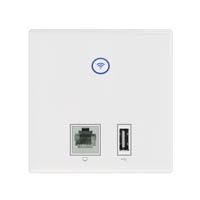

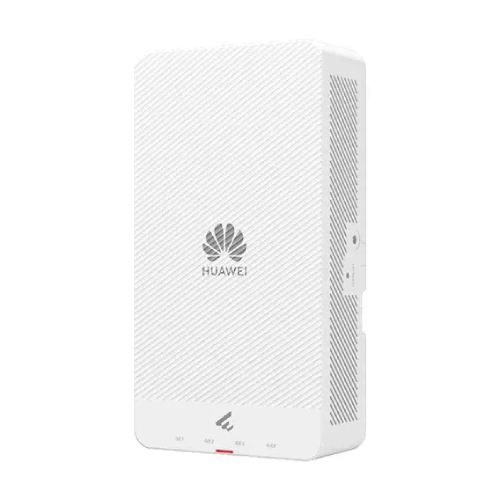
Huawei eKit AP265E Wi-Fi 6 Wall Plate Dual-Radio Smart Antenna Managed PoE Access Point
Regular Price:৳0.00Availability: SKU: 6.53.130.9174
Quick Overview
-
Support
Saturday – Thursday: 09 AM - 06 PM. -
Payment
Cash on Delivery | Card | Online Payment -
Shipping Cost
Inside Dhaka 100tk | Outside Dhaka 150tk -
Warranty Policy
Read More
Description
Huawei eKit AP265E Wi-Fi 6 Wall Plate Dual-Radio Smart Antenna Managed PoE Access Point Price in Bangladesh
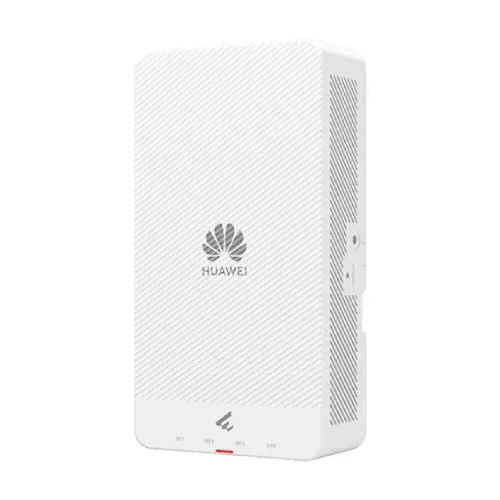
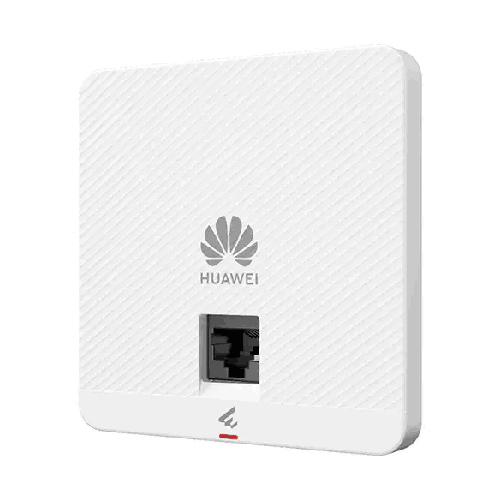
The Huawei eKit AP265E Wi-Fi 6 Wall Plate Access Point is an indoor wireless networking solution designed for businesses and professional environments that need dependable Wi-Fi connectivity in a compact installation format. Combining Wi-Fi 6 technology, dual-radio operation, built-in smart antennas, and multiple Gigabit Ethernet interfaces, this access point provides a practical way to extend wireless network access while supporting wired connections at the installation point.
Unlike a conventional ceiling-mounted access point, the AP265E uses a slim wall-plate design. This form factor is useful in environments where wireless access needs to be distributed across individual rooms, guest areas, offices, or other indoor spaces. Its installation options include a desk, wall, ceiling, and compatible junction boxes, giving network planners flexibility when designing a deployment.
The AP265E supports wireless communication on both the 2.4 GHz and 5 GHz frequency bands. Its 2×2 MIMO configuration on each radio provides four spatial streams across the two bands. Huawei specifies a maximum device rate of 2.975 Gbps, comprising a theoretical rate of up to 575 Mbps on 2.4 GHz and 2.4 Gbps on 5 GHz under the applicable operating conditions. Actual throughput depends on client capabilities, signal conditions, interference, network configuration, and the available wired uplink.
Wi-Fi 6, also known as IEEE 802.11ax, is designed to improve wireless network efficiency, particularly when multiple compatible devices share the network. This makes the AP265E relevant to workplaces, hospitality environments, educational facilities, healthcare settings, and commercial premises where smartphones, laptops, tablets, and other wireless devices need network access.
A key feature of the AP265E is its built-in smart antenna system. Huawei describes its smart antenna technology as a way to adapt wireless coverage and help suppress interference according to the surrounding environment and access density. This can support more deliberate wireless coverage planning than relying only on a fixed antenna arrangement. However, actual coverage and signal quality will vary according to room layout, wall materials, interference, mounting position, and connected-device characteristics.
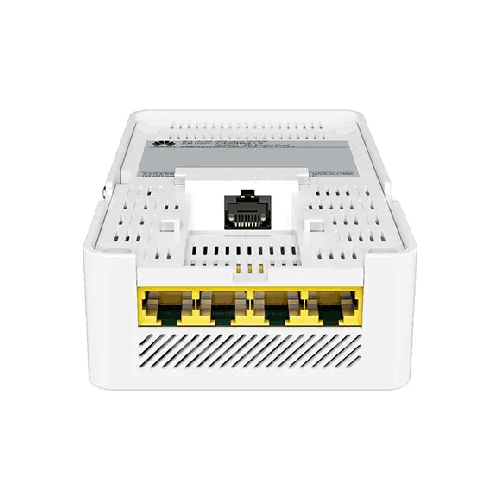
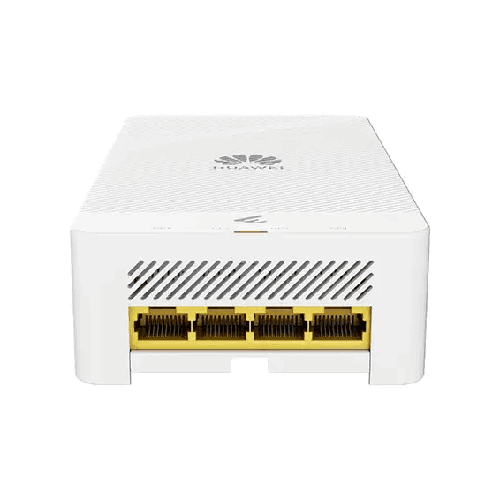
The AP265E also provides five Gigabit Ethernet interfaces in total: one Gigabit Ethernet uplink and four Gigabit Ethernet downlink ports. The uplink connects the access point to the upstream network, while the downlink ports can connect compatible wired devices near the access point. This combination is useful in rooms where wireless access and local wired connectivity are both required.
Power is supplied through Power over Ethernet (PoE) using the IEEE 802.3af standard. With a suitable PoE network switch or injector, the AP can receive power through its Ethernet connection, reducing the need for a separate local power connection. Before deployment, the network designer should confirm that the selected PoE equipment, cabling, and installation meet the device’s requirements.
Huawei lists the AP265E with a recommended access-user count of 64 and a maximum of 128. These figures provide a planning reference rather than a guarantee of performance for every workload. The practical number of simultaneously active users depends on application demands, traffic patterns, client devices, radio conditions, and the overall network design.
For organizations looking for a compact Wi-Fi 6 access point with a wall-plate form factor, smart antennas, PoE power, and multiple Gigabit Ethernet ports, the Huawei eKit AP265E offers a combination of wireless and wired connectivity in a single indoor device.
✅ Key Features
- Wi-Fi 6 Technology: Supports IEEE 802.11ax alongside compatible earlier Wi-Fi standards.
- Dual-Radio Operation: Provides wireless connectivity on both the 2.4 GHz and 5 GHz bands.
- Up to 2.975 Gbps Device Rate: Huawei specifies a combined maximum device rate of 2.975 Gbps under applicable conditions.
- 2×2 MIMO on Both Bands: Each radio supports a 2×2 MIMO configuration.
- Built-In Smart Antennas: Designed to help optimize wireless coverage and manage interference.
- Five Gigabit Ethernet Ports: Includes one uplink and four downlink Gigabit Ethernet ports.
- PoE Power Supply: Supports IEEE 802.3af Power over Ethernet.
- Wall-Plate Design: Offers a compact form factor for room-level and indoor deployments.
- Flexible Installation: Supports desk, wall, ceiling, and specified junction-box installation options.
- 64 Recommended Access Users: Provides a useful reference for network planning.
- 128 Maximum Access Users: Supports up to 128 access users according to Huawei’s specifications.
- Compact Dimensions: Measures 160 × 86 × 38 mm without packaging.
✅ Usage / Applications
- Hotels and Guest Rooms: Provide Wi-Fi access for guests while retaining wired Ethernet connectivity for suitable devices.
- Office Rooms: Extend wireless access to workspaces, meeting rooms, and individual offices.
- Educational Facilities: Support Wi-Fi connectivity for staff, students, and compatible learning devices.
- Healthcare Environments: Provide indoor wireless access in suitable administrative, staff, and patient-facing areas.
- Retail Stores: Connect wireless business devices and support network access in commercial spaces.
- Small and Medium-Sized Businesses: Add wireless access points to offices and business premises.
- Residential Buildings: Provide room-level wireless access where a centrally planned network is required.
- Multi-Room Properties: Support distributed access point deployments across individual rooms or zones.
- Commercial Buildings: Extend Wi-Fi coverage in areas where a wall-plate installation is appropriate.
- Wired Device Connectivity: Connect compatible Ethernet devices through the access point’s downlink ports.
✅ Benefits of Huawei eKit AP265E
- Room-Friendly Installation: The wall-plate form factor suits deployments where a compact access point is preferred.
- Wireless and Wired Connectivity: Combines Wi-Fi access with four Gigabit Ethernet downlink ports.
- Dual-Band Flexibility: Supports compatible clients operating on either the 2.4 GHz or 5 GHz band.
- Wi-Fi 6 Efficiency: Uses 802.11ax technology to improve wireless efficiency in supported environments.
- Simplified Power Cabling: PoE can deliver power and data over an Ethernet connection.
- Flexible Deployment: Multiple installation options help accommodate different indoor layouts.
- Smart Antenna Technology: Supports wireless coverage optimization and interference management.
- Practical Capacity Planning: Huawei’s recommended and maximum user figures help inform deployment design.
- Compact Physical Profile: Its 160 × 86 × 38 mm dimensions help it fit into space-conscious installations.
- Centralized Network Design Potential: Can be deployed as part of a broader Huawei eKit network, subject to the selected management architecture and supported configuration.
✅ Ideal For
The Huawei eKit AP265E Wi-Fi 6 Wall Plate Access Point is ideal for businesses and organizations that need indoor wireless connectivity in a compact, room-oriented form factor. Hotels and guest accommodation providers can consider it for guest rooms or other suitable indoor areas where Wi-Fi and local Ethernet connections are both useful. Offices can use it to provide wireless access in individual workspaces, meeting rooms, or small departmental areas.
Educational institutions may consider the AP265E for classrooms, staff rooms, and administrative spaces, while retail businesses can use it in suitable areas requiring wireless access for employees and compatible business devices. It can also form part of a wider indoor network across multi-room commercial properties.
The device is particularly relevant when the installation plan calls for dual-band Wi-Fi 6, PoE power, and multiple Gigabit Ethernet ports at the access point. Its recommended capacity of 64 access users can help with initial planning, although the final number of access points should be based on expected simultaneous usage, application requirements, building materials, interference, and coverage measurements.
For larger or more demanding environments, network designers should evaluate the complete wireless architecture rather than selecting access points solely by their advertised maximum user count or combined theoretical data rate.
✅ Why Choose Huawei eKit AP265E?
The Huawei eKit AP265E brings together several features that address common indoor networking requirements. Its Wi-Fi 6 support provides a modern wireless standard for compatible client devices, while dual-radio operation allows it to serve devices across the 2.4 GHz and 5 GHz bands. This is useful in environments where clients have different wireless capabilities and where network administrators need to balance compatibility, coverage, and performance.
Its wall-plate design is another important consideration. Instead of relying exclusively on a traditional ceiling-mounted access point, the AP265E can be installed in room-oriented locations. This can help network planners distribute wireless access across a property according to its layout and intended use.
The five Gigabit Ethernet ports also distinguish the AP265E from access points that provide only a single Ethernet connection. One port serves as the uplink, while four downlink ports can support nearby wired devices. This arrangement may reduce the need for separate local connectivity equipment in some installations, although the exact network topology should be planned carefully.
Smart antenna technology is designed to help optimize wireless coverage and reduce interference. In practical deployments, its contribution will depend on the physical environment, the number and location of access points, and the surrounding radio conditions. A site survey remains important where reliable coverage is required across multiple rooms or floors.
PoE support can simplify installation by allowing power to be supplied through Ethernet cabling. The AP265E supports IEEE 802.3af, so the chosen switch or injector should be checked for standards compatibility and adequate power delivery.
Together, these characteristics make the Huawei eKit AP265E a candidate for indoor business networks that require a compact Wi-Fi 6 access point with integrated wired connectivity.
✅ Why Buy from BME?
When selecting a networking product, it is important to match the hardware to the actual requirements of the installation. The Huawei eKit AP265E is designed for indoor wireless networking, but factors such as the number of users, building layout, wired infrastructure, PoE availability, and management requirements should all be considered before purchase.
BME customers can use the product’s documented specifications as a starting point for evaluating whether it fits their planned deployment. The dual-band Wi-Fi 6 capability, five Gigabit Ethernet ports, wall-plate form factor, and PoE support are particularly relevant when comparing access points for room-level connectivity.
Before placing an order, confirm the exact model, part number, included accessories, warranty terms, stock status, and any installation or configuration services directly with BME. These details can vary by offer and should not be assumed from the manufacturer’s hardware specifications alone.
For a business installation, it is also worth checking whether the existing network switch supports the required PoE standard, whether the cabling is suitable, and how the access point will be managed. A clear deployment plan helps reduce compatibility issues and ensures that the selected equipment meets the intended networking requirements.
✅ Buying Guide
1. Confirm the Required Wi-Fi Standard
The AP265E supports Wi-Fi 6 (802.11ax), along with earlier standards listed by Huawei. Check the wireless standards supported by the devices that will connect to the network.
2. Evaluate the Expected User Load
Huawei recommends 64 access users and lists a maximum of 128. These are planning figures, not guaranteed performance levels. Consider simultaneous usage and the applications being used.
3. Check the Ethernet Requirements
The AP265E has one Gigabit Ethernet uplink and four Gigabit Ethernet downlink ports. Confirm that these interfaces suit the planned connection layout and that the uplink matches the requirements of the wider network.
4. Verify PoE Compatibility
The AP265E supports IEEE 802.3af PoE. Confirm that the network switch or injector provides compatible power and that the complete installation meets the required power budget.
5. Plan the Installation Location
The device supports desk, wall, ceiling, and specified junction-box installation. Select a location that provides suitable coverage and access to the required Ethernet connection.
6. Assess Coverage Requirements
Huawei lists an optimal signal distance of 20 metres. Treat this as a manufacturer planning reference, not a guaranteed indoor radius. Walls, furniture, interference, mounting height, and client devices can change actual coverage.
7. Review Network Management
Huawei documentation describes local deployment and management options, including EasyWeb or a wireless access controller, as well as remote management through the Huawei eKit App and SNC platform. Confirm the applicable software, platform, and configuration requirements for the intended deployment.
8. Confirm the Purchase Details
Before ordering, verify the exact model and part number, warranty, included accessories, stock availability, and any support services offered by the seller.
✅ Frequently Asked Questions (FAQ)
1. What is the Huawei eKit AP265E?
The Huawei eKit AP265E is an indoor Wi-Fi 6 wall-plate access point with dual-radio wireless connectivity, built-in smart antennas, five Gigabit Ethernet ports, and PoE support.
2. Does the Huawei AP265E support Wi-Fi 6?
Yes. It supports IEEE 802.11ax, commonly known as Wi-Fi 6, along with compatible earlier Wi-Fi standards.
3. What is the maximum wireless data rate?
Huawei specifies a maximum combined device rate of 2.975 Gbps. This is a theoretical aggregate rate under applicable conditions, not a guaranteed speed for an individual client or internet connection.
4. Which frequency bands does the AP265E support?
It operates on the 2.4 GHz and 5 GHz bands.
5. How many Ethernet ports does it have?
It has five Gigabit Ethernet ports in total: one uplink and four downlink ports.
6. Does the AP265E support PoE?
Yes. It supports IEEE 802.3af Power over Ethernet. Use a compatible PoE switch or injector.
7. How many users can connect to the AP265E?
Huawei lists 64 recommended access users and a maximum of 128. Actual performance depends on traffic, client devices, radio conditions, and the network configuration.
8. Can the AP265E be wall-mounted?
Yes. Huawei lists desk, wall, ceiling, and specified junction-box installation options.
9. What are the dimensions of the AP265E?
The unboxed dimensions are 160 × 86 × 38 mm.
10. Is the AP265E suitable for hotels and offices?
It is designed for indoor use and can be considered for hotels, offices, schools, hospitals, commercial stores, and similar environments. The final suitability depends on the site design and performance requirements.
11. Does the AP265E include a built-in smart antenna?
Yes. Huawei specifies built-in smart antennas for the AP265E.
12. What should I check before buying?
Confirm the required coverage, expected user load, uplink capacity, PoE compatibility, installation method, management requirements, and the exact purchase terms.
✅ Why Buy This Product?
The Huawei eKit AP265E Wi-Fi 6 Wall Plate Access Point is designed for indoor networks that need wireless access and local wired connectivity in one compact device. Its dual-radio architecture supports both 2.4 GHz and 5 GHz wireless clients, while Wi-Fi 6 technology provides a modern wireless standard for compatible devices.
The built-in smart antenna system is intended to help optimize coverage and manage interference. Meanwhile, the five Gigabit Ethernet ports provide one uplink and four downlink connections, allowing the access point to serve as a local connectivity point for compatible wired equipment as well as wireless clients.
PoE support adds installation flexibility by allowing power to be delivered over Ethernet using compatible IEEE 802.3af equipment. The wall-plate form factor and multiple installation options make it relevant to room-level deployments in hotels, offices, educational facilities, retail spaces, and other indoor environments.
Huawei specifies a maximum device rate of 2.975 Gbps, 64 recommended access users, and a maximum of 128 access users. These figures help with initial planning, but real-world performance depends on the network design and operating environment.
For organizations evaluating an indoor Wi-Fi 6 access point with integrated Gigabit Ethernet ports, smart antennas, and PoE, the AP265E offers a clearly defined set of capabilities. Confirm the installation requirements, management compatibility, and seller-specific purchase terms before ordering.
What is the price of Huawei eKit AP265E Wi-Fi 6 Wall Plate Dual-Radio Smart Antenna Managed PoE Access Point in Bangladesh?
Write a review
Question Answer
Have question about this product? Get specific details about this product from expert.