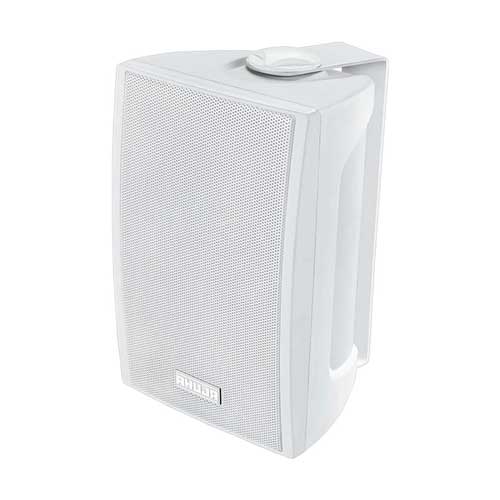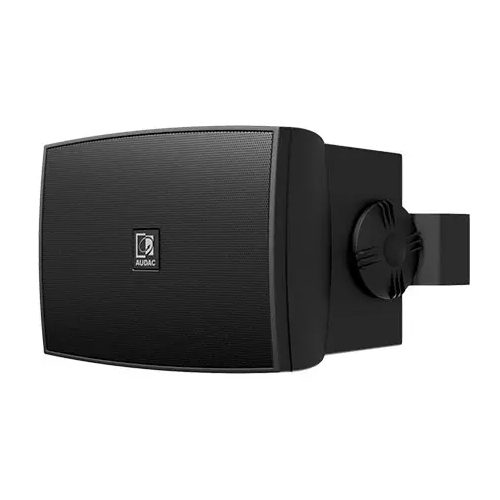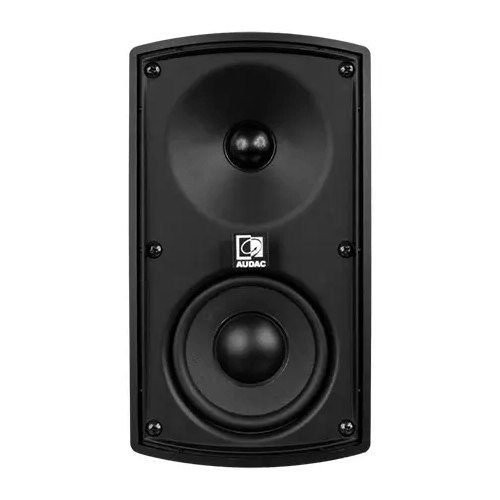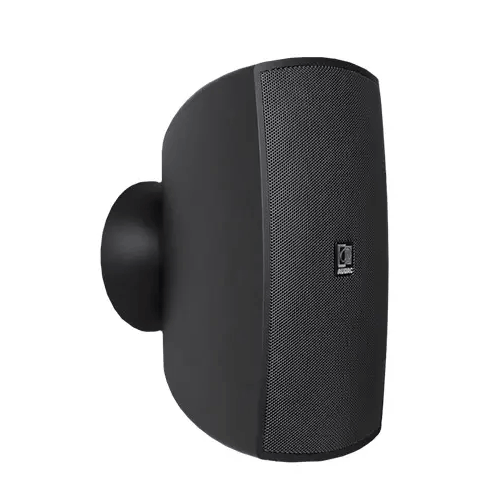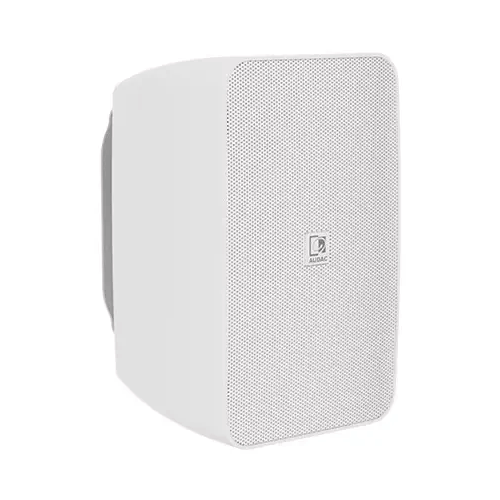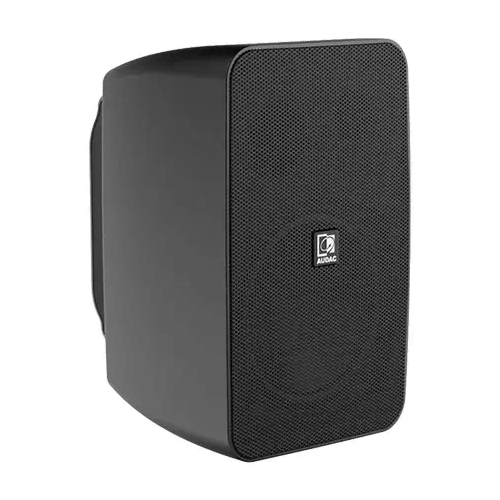

Audac ARES5A 2x40W 2-Way Stereo Active Speaker System
Regular Price:৳0.00Availability: SKU: 6.87.617.9661
Quick Overview
-
Support
Saturday – Thursday: 09 AM - 06 PM. -
Payment
Cash on Delivery | Card | Online Payment -
Shipping Cost
Inside Dhaka 100tk | Outside Dhaka 150tk -
Warranty Policy
Read More
Description
Audac ARES5A 2x40W 2-Way Stereo Active Speaker System in Bangladesh
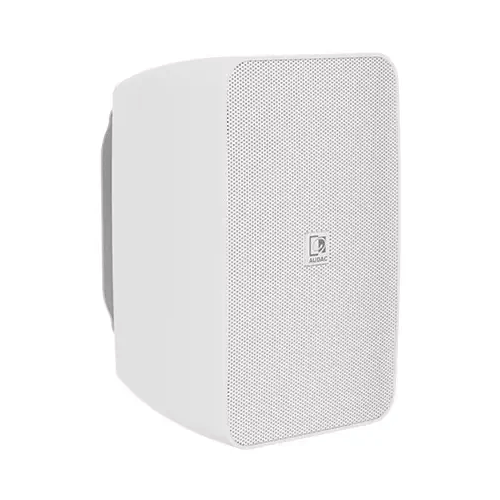
The Audac ARES5A/W is a 2-way stereo active speaker system supplied as a pair: one active speaker and one passive speaker. Its listed drivers are a 5¼-inch polypropylene low-frequency driver and a 13 mm PEI tweeter. The supplied ratings are 2 × 20 W RMS/AES and 2 × 40 W dynamic, with a stated frequency response of 80 Hz–20 kHz (±3 dB). A recessed mounting bracket is included, and the speakers are described as suitable for vertical or horizontal mounting. This combination makes the system worth considering where a stereo pair and flexible wall placement suit the room.
Active and passive pair: The product information describes one active and one passive model. It also lists a passive loudspeaker output on the active system, using a 2-pin Euro terminal block. This gives buyers a clear point to check when planning how the pair will be connected. The supplied information does not describe every wiring step, signal-routing option or control function, so follow the product’s installation documentation rather than assuming how the active and passive speakers should be linked.
The pair format can be useful when you need stereo playback from two speakers rather than a single speaker. Before purchase, consider where each speaker will be placed, how the signal and power cables will reach them, and whether the room layout suits stereo listening. A room with widely separated speakers, irregular seating or different listening zones may not provide the same stereo experience to everyone. Assess the intended positions before deciding that a pair will meet the room’s audio needs.
Two-way driver arrangement: The system is listed with a 5¼-inch polypropylene LF driver and a 13 mm PEI tweeter. These specifications identify the supplied low- and high-frequency driver types. They do not, by themselves, define the complete acoustic design or guarantee a particular sound in every installation. Wall position, room reflections, source quality, listening distance and system settings all influence the result. Use the driver information as one part of a broader assessment of the room and application.
The speaker system’s frequency response is specified as 80 Hz–20 kHz within ±3 dB. This figure provides a useful reference for comparing the product with a project’s audio requirements. It does not include a full response curve or explain measurement conditions. If the room or programme material has specific low-frequency requirements, ask whether additional equipment is appropriate rather than assuming that the stated response alone defines the sound across the listening area.
Power ratings: The supplied data lists 2 × 20 W RMS/AES and 2 × 40 W dynamic. Keep these two ratings distinct. The 2 × 40 W dynamic figure should not be presented as the continuous RMS/AES rating or used as a substitute for it. If the system is being compared with another speaker set or selected for a particular room, use the applicable rating and request clarification of the measurement convention if the distinction matters to the design.
The ratings are provided for the stereo system; the information does not state a separate power figure for each individual cabinet or explain how power is divided between the active and passive units. Avoid assuming that each speaker independently receives a specific wattage unless Audac confirms it. The supplied product title uses “2x40W,” while the specification separately gives “2 × 40 W dynamic” and “2 × 20 W RMS/AES”; keep that distinction clear in technical comparisons.
Sensitivity and maximum sound pressure: Sensitivity is listed as 89 dB at 1 W/1 m, and maximum sound pressure is listed as 105 dB. The supplied information does not explain the test conditions for the maximum figure. Treat 105 dB as the stated value rather than as a guaranteed level at every listening position or a directly comparable measurement without matching test methods. Sensitivity and maximum sound pressure are separate specifications; neither alone establishes the coverage or perceived loudness in a particular room.
When evaluating the system for a meeting room, office or other space, consider the background noise, listening distance, placement and required sound level. A sound-pressure figure measured under particular conditions cannot predict the level throughout a room without more information about the test and installation. For a project with defined coverage targets, request further acoustic data or a room-specific recommendation.
Wide dispersion figures: Horizontal dispersion is listed as 210° and vertical dispersion as 205°, each described as an average −6 dB value over 100 Hz–10 kHz. The frequency band and averaging note matter: these are not a guarantee of identical coverage at every frequency or in every installation. Use the figures as planning references, then consider wall position, mounting orientation, listening area and room reflections.
A wide dispersion specification may be relevant when listeners are spread across a room, but it does not determine the number of speakers required or ensure uniform volume. In a long or unusually shaped space, one stereo pair may not serve all listening positions equally. If consistent coverage is essential, map likely listening areas and consult the system documentation or an appropriate audio professional.
Balanced input connections: The balanced stereo inputs are specified as two 3-pin Euro terminal blocks with a 3.81 mm pitch. This detail can help with signal-source and cable planning. The listing does not provide a pinout, supported input level or wiring diagram, so confirm the correct connection method before installation. Check the output format of the connected mixer or other source against the ARES5A/W input requirements.
Unbalanced input connections: The supplied data also lists two 3.5 mm jacks for unbalanced stereo input. Confirm the intended signal arrangement and routing before connecting a source, especially if the system will be used with more than one input type. The listing does not explain input selection, mixing behaviour or whether balanced and unbalanced sources can be connected and used at the same time. Do not assume simultaneous use or automatic source switching unless the product documentation confirms it.
Remote connection and optional wall panel: A remote-control connector using RJ45 is listed. The optional WP205 wall panel is named as an ARES5A accessory. The information does not describe the wall panel’s exact functions, control options, cabling requirements or whether it connects through the listed RJ45 port. Confirm compatibility and operation before ordering the optional panel. The RJ45 connector is identified as a remote connection; it should not be treated as a network or internet port based on the connector shape alone.
Passive-speaker output: The passive loudspeaker output is specified as a 2-pin Euro terminal block with a 5.08 mm pitch. A 3.5 m speaker connection cable is listed as included. Check the required cable route between the active and passive speakers and confirm that the included length suits the planned installation. If the run needs to be longer, ask about an appropriate cable and the supported connection method rather than extending the run without checking the system requirements.
The supplied information does not give an output pin assignment or installation diagram. Confirm the polarity and terminal layout in the product documentation before wiring. This is especially useful when the speakers will be mounted apart or where the connection will be concealed. A cable that physically fits is not enough to establish that it is wired correctly.
AC power and consumption: The system is specified for 100–240 V AC at 50–60 Hz and lists an IEC C7/C8 power connection. The power cable is included according to the supplied accessory list. Nominal consumption is stated as 11.3 W at “1/8 MUP,” and standby consumption is listed as less than 0.35 W. The supplied information does not explain the term “MUP,” so confirm its meaning if you need to use the consumption figure for detailed energy calculations.
Check that the planned outlet, cable route and installation location suit the specified mains supply. The power figures are product specifications, not a complete guide to the electrical installation. Do not assume that the remote RJ45 connection supplies power or that it can replace the listed AC connection. The active system’s mains requirement and the passive speaker connection are separate parts of the setup.
Dimensions and pair weight: The system’s dimensions are listed as 150 × 240 × 146 mm (W × H × D) without the mounting bracket, and 150 × 240 × 194 mm with the bracket. The stated weight is 3.5 kg for the pair; no individual speaker weight was provided. Use the bracket-inclusive depth when checking wall clearance and nearby fixtures. The measurements can help with early planning, but consult the installation drawing when exact clearance or mounting position is critical.
The recessed bracket is described as part of the mounting design. It may be useful where the speakers need to sit against a wall, but the supplied information does not specify every allowable wall material, fixing method or adjustment range. Confirm the installation instructions for the intended surface and check that the wall can support the speaker pair. Keep access to the cables and connections in mind when choosing the final positions.
Mounting orientation: Vertical and horizontal mounting are both listed. This flexibility may help when the available wall area or room layout favours one orientation. Check the manufacturer’s guidance for the correct orientation, bracket use and speaker aiming before drilling. The dimensions are provided for the system without and with the bracket, so include the bracket depth in the layout assessment.
The wide dispersion values should be interpreted alongside mounting orientation and listening positions. A speaker’s coverage can vary with frequency and the way it is installed. Do not assume that rotating a cabinet produces exactly the same coverage in every room or that the supplied horizontal and vertical dispersion figures remain unchanged under all conditions. Test the completed setup at the positions where people will listen.
Enclosure, grille and finish: The enclosure is described as ABS, and the front finish as a powder-coated steel grille with lining. The supplied material also describes the ABS as impact- and UV-resistant. These are product-construction details; they do not establish a water-resistance or ingress-protection rating. No IP rating was supplied, so do not assume that the speaker is suitable for outdoor, wet or exposed locations.
The product is identified as the white ARES5A/W variant, but the supplied finish entries conflict: one says white RAL9005 and another says white RAL9003. Confirm the actual colour code with BME or Audac rather than silently choosing one. This check matters if the speakers must match other installed equipment, wall finishes or a design specification. The product title and model indicate the white variant, while the precise RAL reference remains unresolved.
Included and optional accessories: The supplied list says the system includes a mounting bracket, power cable, a 3.5 m speaker connection cable, and wall screws and plugs. Confirm the package contents for the specific unit being offered, particularly if the installation relies on a particular fixing method or cable length. The optional WP205 wall panel is not listed as a standard included accessory. Ask separately about its compatibility and functions if it is required.
Potential uses: The ARES5A/W may be considered for offices, meeting rooms, reception areas, classrooms, retail spaces and other settings where a compact stereo pair and wall mounting suit the audio plan. These are potential applications, not guarantees that the system will provide adequate coverage in every room. Room size, listener positions, ceiling height, ambient noise and the source content all affect the result.
For speech playback, consider where listeners sit or stand and whether both speakers can be placed to serve the intended area. For music, assess the desired playback level and whether the stated frequency response meets the project’s requirements. If the room is long, divided or acoustically challenging, a single pair may not provide consistent coverage throughout. The supplied specifications do not give a recommended room size or speaker spacing, so plan against the actual room.
System matching and common mistakes: The listing provides balanced and unbalanced inputs, a passive speaker output and a separate remote RJ45 connection. Confirm the signal source, the cable types, the output connection and the intended use of any optional wall panel. Do not confuse the RJ45 remote connector with a network socket, and do not assume the balanced and unbalanced inputs can be used simultaneously. Check all these points in the product instructions.
Keep the two power ratings distinct, confirm the difference between the active and passive speakers, and use the supplied connection details for the pair. Do not treat the dynamic rating as a continuous RMS/AES figure. Check the cable length and wall mounting requirements before installation, and verify the white finish code if colour matching is important.
Installation and commissioning: Before mounting, check the wall surface, bracket position, cable route and the extra depth required when the bracket is fitted. Identify the active and passive speakers and follow the documented signal and speaker-connection procedure. Confirm that the power cable reaches the active unit and that the included 3.5 m speaker cable reaches the passive unit. If the layout requires a longer connection, verify an appropriate solution before fitting the speakers.
After installation, test both speakers at a moderate level using the intended source. Check stereo operation, sound balance, cable security and coverage at the expected listening positions. If sound is uneven, review placement and orientation before increasing the level. A short test before the space is in use can reveal wiring or placement issues while the installation remains accessible.
The supplied specifications do not provide an operating-temperature range or IP rating. Do not infer either from the stated impact- and UV-resistant ABS material. No warranty term was supplied for this listing, so confirm any applicable warranty and its terms with BME. These details, along with the conflicting RAL codes and the function of the optional WP205 panel, are worth resolving before purchase.
Overall, the Audac ARES5A/W is a white stereo active/passive pair with two-way drivers, balanced and unbalanced input options, a passive-speaker output and a recessed bracket for vertical or horizontal mounting. Its stated 2 × 20 W RMS/AES and 2 × 40 W dynamic ratings, response, dispersion and dimensions provide useful starting points for planning. Confirm the white finish code, input behaviour, remote-panel compatibility and installation requirements before choosing it for a particular room.
✅ Key Features
- Stereo Active/Passive Pair: The system is specified as one active speaker and one passive speaker for stereo use.
- Two-Way Driver Design: The listed drivers are a 5¼-inch polypropylene LF driver and a 13 mm PEI tweeter.
- Separate Power Ratings: The supplied figures are 2 × 20 W RMS/AES and 2 × 40 W dynamic.
- Balanced and Unbalanced Inputs: The system lists balanced stereo Euro terminal inputs and two 3.5 mm jack connections for unbalanced stereo.
- Passive-Speaker Output: A 2-pin Euro terminal block is specified for the passive loudspeaker connection.
- Recessed Mounting Bracket: The included bracket is listed for wall mounting.
- Vertical or Horizontal Installation: Both orientations are specified; follow the installation guidance for positioning.
- Wide Listed Dispersion: Average dispersion is given as 210° horizontal and 205° vertical over 100 Hz–10 kHz at −6 dB.
- Remote Connection: An RJ45 connector is listed for remote control; do not assume it is a network port.
- Included Connection Accessories: The supplied list includes a power cable, 3.5 m speaker cable, mounting bracket, screws and plugs.
✅ Usage / Applications
- Meeting Rooms: Consider for stereo playback where the pair’s coverage and mounting positions suit the room.
- Office Spaces: Assess for speech or general audio using compatible sources and the listed input connections.
- Reception Areas: Plan the pair around listener positions and the desired playback level.
- Classrooms and Training Rooms: Evaluate for audio playback after checking room coverage and installation requirements.
- Retail Spaces: Consider for stereo audio in a suitable room layout and system configuration.
- Wall-Mounted Stereo Setups: Use where vertical or horizontal mounting suits the available wall space.
- Balanced Audio Installations: Check the Euro terminal input connections against the source equipment.
- Unbalanced Audio Setups: Confirm the intended arrangement of the two 3.5 mm input jacks before connecting a source.
- Remote-Panel Projects: Investigate the optional WP205 panel after confirming its compatibility and functions.
- System Replacements or Upgrades: Check the active/passive arrangement, cable lengths and mounting requirements before replacing existing speakers.
✅ Benefits of This Product?
- Stereo Pair in One System: Provides one active and one passive speaker as a specified pair.
- Flexible Wall Placement: Vertical and horizontal mounting options help with room-layout planning.
- Choice of Input Types: Balanced terminal inputs and unbalanced 3.5 mm jacks provide connections to investigate for source compatibility.
- Separate Ratings for Comparison: RMS/AES and dynamic figures are stated separately, making the distinction clearer during system planning.
- Included Passive-Speaker Cable: The listed 3.5 m cable can simplify planning if its length suits the intended layout.
- Recessed-Bracket Design: Provides a specified mounting approach for a wall installation.
- Useful Coverage References: The stated dispersion values help frame placement discussions.
- More Informed Setup Planning: Confirming the RAL code, input behaviour and remote connection helps avoid assumptions.
✅ Ideal For
The Audac ARES5A/W is ideal for buyers who need a stereo pair with one active and one passive speaker and a wall-mounted installation. It may suit offices, meeting rooms, classrooms, reception areas and retail spaces where the included bracket, vertical or horizontal placement and supplied input options fit the room’s audio plan. The balanced terminal inputs and unbalanced 3.5 mm jacks give system designers specific connections to check against their source equipment.
It is best suited to purchasers prepared to verify the active/passive connection, cable lengths and intended input behaviour before installation. The listed 2 × 20 W RMS/AES and 2 × 40 W dynamic ratings are different figures and should not be treated as interchangeable. The white version’s supplied RAL codes conflict, and the remote RJ45 connection should not be assumed to be a network port. Confirm the exact finish, optional WP205 panel functions and applicable warranty terms with BME.
✅ Why Choose the Audac ARES5A/W 2-Way Stereo Active Speaker System?
The ARES5A/W brings together a two-way speaker design, an active/passive stereo pair and a recessed mounting bracket. Its listed 5¼-inch polypropylene LF driver and 13 mm PEI tweeter provide clear component details for system comparison. The stated frequency response is 80 Hz–20 kHz (±3 dB), while the sensitivity is 89 dB at 1 W/1 m. These figures help with preliminary planning, though placement, room acoustics and the audio source remain important to the final result.
Its connection options are another point to consider. The supplied specifications list balanced stereo inputs on two 3-pin Euro terminal blocks, unbalanced stereo inputs through two 3.5 mm jacks, and a 2-pin Euro terminal block output for the passive speaker. The active system also has an RJ45 remote-control connector, with the optional WP205 wall panel named as an accessory. Confirm input routing and panel compatibility rather than assuming functions from the connector types.
The pair’s stated dimensions, bracket-inclusive depth, included 3.5 m speaker cable and vertical or horizontal mounting options are useful for planning the installation. The power figures must be read separately: 2 × 20 W RMS/AES and 2 × 40 W dynamic. The supplied white finish codes conflict, so confirm the actual RAL code if matching matters. If the layout, input connections and ratings suit your requirements, the ARES5A/W is a considered stereo system to evaluate.
✅ Why Buy This Product from BME?
For buyers in Bangladesh, contact BME to enquire about the Audac ARES5A/W and confirm current product and purchase details. No current price or availability is stated here, so ask BME for a quote and the terms applicable to your order. Confirm any delivery or collection arrangements directly rather than assuming they are available.
Use your enquiry to verify the exact white variant and resolve the conflicting RAL finish codes in the supplied specifications. You can also confirm the package contents, including the bracket, power cable, 3.5 m speaker cable, screws and plugs. If you are considering the optional WP205 wall panel, ask whether it is compatible with the unit offered and what functions it provides. Confirm the active/passive connection and the input arrangement required for your source equipment.
No warranty term was supplied for this listing. Ask BME to confirm whether a warranty applies and, if so, its issuer, coverage, eligibility and Bangladesh terms. These checks help you compare the exact product with your room, cabling and audio system without making assumptions about stock, accessories, warranty or services.
✅ Buying Guide
- Confirm the Exact Model: Check that the product offered is ARES5A/W, the white variant.
- Clarify the Finish: The supplied data lists both RAL9005 and RAL9003 for white; confirm the correct code.
- Understand the Ratings: The listing gives 2 × 20 W RMS/AES and 2 × 40 W dynamic; do not treat these as equivalent.
- Plan the Pair: Identify the active and passive speakers, their positions and the connection route between them.
- Match the Inputs: Confirm whether your source uses the balanced Euro terminal inputs or the unbalanced 3.5 mm jacks.
- Check the Remote Connection: RJ45 is listed for remote control; do not assume it is Ethernet or a network port.
- Confirm the Optional Panel: Ask about the WP205’s compatibility, connection and functions before ordering it.
- Measure the Installation: Check dimensions with the bracket fitted and confirm the wall can support the planned mounting.
- Check Cable Lengths: The passive-speaker cable is listed as 3.5 m; verify it suits the actual layout.
- Confirm Package and Terms: Ask BME to confirm included accessories and applicable warranty or purchase terms.
✅ Customers Ask About / Frequently Asked Questions
Q: What is the Audac ARES5A/W price in Bangladesh?
A: Contact BME for the current quote and purchase terms.
Q: Is the ARES5A/W a pair of active speakers?
A: The supplied information describes a stereo pair with one active speaker and one passive speaker.
Q: What do the 2 × 40 W and 2 × 20 W ratings mean?
A: The supplied specifications list 2 × 40 W as dynamic power and 2 × 20 W as RMS/AES. They are different ratings; do not treat the dynamic figure as the continuous rating.
Q: What drivers are specified?
A: The listing gives a 5¼-inch polypropylene LF driver and a 13 mm PEI tweeter.
Q: What inputs does the system have?
A: Two 3-pin Euro terminal inputs are listed for balanced stereo, along with two 3.5 mm jacks for unbalanced stereo. Confirm their intended routing before connecting sources.
Q: Is the RJ45 remote connection a network port?
A: It is listed as a remote-control connector. The supplied information does not identify it as a network port.
Q: Does the ARES5A/W include a wall panel?
A: The WP205 wall panel is listed as optional, not as a confirmed included accessory. Check its compatibility and functions separately.
Q: What mounting orientations are supported?
A: Vertical and horizontal mounting are listed. Follow the installation guidance for the correct bracket use and positioning.
Q: What is included in the package?
A: The supplied list includes a mounting bracket, power cable, 3.5 m speaker connection cable, wall screws and plugs. Confirm the contents of the product offered.
Q: Which RAL colour code applies to the white model?
A: The supplied specifications conflict, listing both RAL9005 and RAL9003 as white. Confirm the correct finish code with BME.
Q: What warranty is included?
A: No warranty term was supplied for this listing. Ask BME to confirm whether a warranty applies and its terms.
✅ Why Buy This Product
Consider the Audac ARES5A/W if you need a two-way stereo speaker system supplied as one active and one passive speaker, with a recessed mounting bracket and options for vertical or horizontal placement. Its balanced and unbalanced input details, passive-speaker output and included 3.5 m connection cable provide useful starting points for checking whether it fits your source equipment and room layout.
Before choosing it, confirm the distinction between the 2 × 20 W RMS/AES and 2 × 40 W dynamic ratings, check the active/passive wiring and clarify the white model’s conflicting RAL codes. Verify the functions of the optional WP205 wall panel and whether the included cable lengths suit your installation. For current product information in Bangladesh, contact BME with your requirements and confirm the exact product and applicable terms.
What is the price of Audac ARES5A 2x40W 2-Way Stereo Active Speaker System in Bangladesh?
Write a review
Question Answer
Have question about this product? Get specific details about this product from expert.